The Doorstep Dispatch: Meet the Writers Secretly Delivering Stories Through Britain's Letterboxes
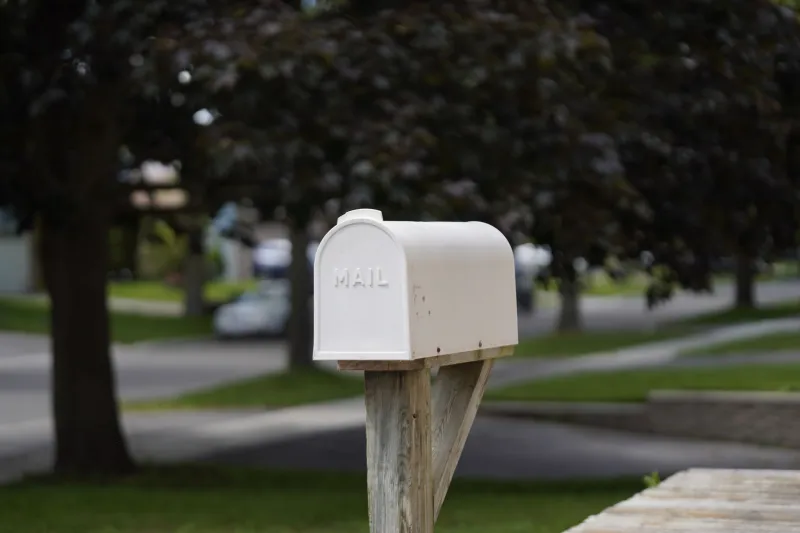
It arrived on a Tuesday in February — the kind of Tuesday that has nothing to recommend it. Cold, grey, and relentlessly ordinary. Donna, a 43-year-old healthcare administrator from Coventry, pulled the usual drift of envelopes from her letterbox: a gas bill, a pizza leaflet, something from the council.
And then, tucked among them, a folded piece of paper. No envelope. No address. Just a short story — perhaps three hundred words — about a woman who discovers a door in her garden wall that wasn't there the day before. At the bottom, in small, careful letters: For whoever needs this today.
"I stood in my hallway and read it three times," says Donna. "I don't know who wrote it. I still don't. But I cried, and then I felt better, and I've kept it in my kitchen drawer ever since."
Somewhere in her street, someone is writing stories for strangers. And they're not alone.
The Underground Library of the Letterbox
Across Britain — in terraced streets in Sheffield, cul-de-sacs in Cardiff, Victorian rows in Brighton — a quiet and rather extraordinary practice is emerging. Writers, of varying experience and background, are creating short pieces of fiction — sometimes a single page, sometimes less — and posting them anonymously through their neighbours' doors.
There's no organisation behind it. No central movement, no manifesto, no social media campaign claiming credit. That's rather the point. The stories arrive without context, without authorship, without any mechanism for the recipient to respond. They simply appear, like a small, unexpected kindness from the world.
Finding the people behind the practice requires patience. They don't advertise themselves. But spend enough time asking quietly in the right places, and they begin to emerge — a little sheepish, a little delighted, and unanimous in their insistence that the anonymity is everything.
Why Anonymous?
Oliver, a 36-year-old secondary school English teacher from Sheffield, has been posting stories through his neighbours' letterboxes for almost two years. He started during a difficult personal period — a bereavement he found he couldn't write about directly — and discovered that writing around his grief, in the form of short fiction for unknown readers, gave him a way through it.
"If I'd put my name on them, it would have changed everything," he explains. "My neighbours would have felt they had to say something. It would have become about me — my grief, my writing, whether they liked it. The anonymity keeps the story clean. It belongs to them, not to me."
This is a sentiment echoed by almost everyone involved. The anonymity isn't modesty or shyness — it's a deliberate act of generosity. By removing themselves from the equation, the writers ensure that the story lands without obligation, without social debt, without the awkwardness of a gift that requires acknowledgement.
"A story with your name on it is a gift with strings," says Priya, a 29-year-old freelance copywriter from Brighton who posts fiction on her street every few weeks. "An anonymous story is just... free. Completely free. The person who finds it can do whatever they want with it. They don't owe you anything."
What Goes Through the Door
The stories themselves vary enormously. Some are whimsical — a talking fox who gives directions, a cloud that falls in love with a chimney. Others are quietly realistic: a conversation between two strangers on a park bench, a woman remembering her mother's hands. Some are consoling, some gently funny, some simply atmospheric — a description of a summer evening so vivid it almost smells of cut grass.
What they share, almost without exception, is an absence of darkness. These are not stories designed to challenge or disturb. They're written, their creators say, to offer something — a moment of beauty, a sense of being seen, the particular comfort of a well-told tale.
"I think about who might open that door," says Oliver. "It could be someone who's just had terrible news. It could be someone who's lonely. It could be a kid who collects them — one family on my street apparently has a folder. I write something I'd want to find on a bad day."
The Readers Who Find Them
Donna isn't alone in having been stopped in her tracks by an unexpected story on her mat. Through conversations and quiet word-of-mouth, it becomes clear that these small deliveries are landing with considerable impact.
Marcus, a 67-year-old retired engineer from Cardiff, received a story during a period of profound isolation following surgery that kept him housebound for three months. "It was about a lighthouse keeper who discovers that the light he's been tending isn't guiding ships — it's guiding something else entirely. Something wonderful," he says. "I don't know what I made of it theologically. But I know it made me feel less alone that day. Like someone out there was thinking about the people behind the doors."
That sense of being thought of — invisibly, freely, without agenda — seems to be at the core of why these stories matter so much to the people who receive them. In an age of targeted content and personalised feeds, something addressed to whoever needs this today feels almost radical in its generosity.
The Act of Writing for No Return
For the writers themselves, the practice offers something unexpected: freedom. Without the pressure of publication, without readers who might review or critique, without even the knowledge of whether the story was read at all, writing becomes purely itself.
"I've been writing seriously for fifteen years," says Priya. "I've had things published, I've been rejected, I've agonised over every word. Writing these little letterbox stories is the most joyful writing I do. Because it doesn't matter. It only has to be good enough to give someone a moment. That's it. That's the whole brief."
Oliver agrees. "I've written things for letterboxes that I'm genuinely proud of — things I'd never have written if I was thinking about publication. Because I wasn't protecting myself. I was just... giving."
A Street That Talks in Stories
Some neighbourhoods, it seems, have developed their own quiet ecosystems around the practice. On one street in Brighton, Priya suspects that at least two other residents have started posting their own stories in response to hers — though she has no way of confirming it, and neither party has broken the anonymity.
"Sometimes I find a story in my own letterbox," she says, grinning. "And I have no idea if it's a coincidence or a reply. I like not knowing."
Donna, in Coventry, has started writing her own stories now — small things, tentative, nothing she'd have called herself a writer before. She posts them on her street on the first of every month.
"I still haven't had one back," she says. "But that's not really the point, is it? The point is that someone, somewhere, might open their door on a grey Tuesday and find something waiting for them. And for just a moment, the world might feel a little less ordinary."
Somewhere in Britain, right now, someone is folding a story into a rectangle small enough to fit through a letterbox. They'll post it quietly, walk away without looking back, and never know what happens next.
That, it turns out, is exactly enough.