Pocket Tales and Hidden Wonders: The Secret Society of Story-Leavers Brightening Britain's Ordinary Moments
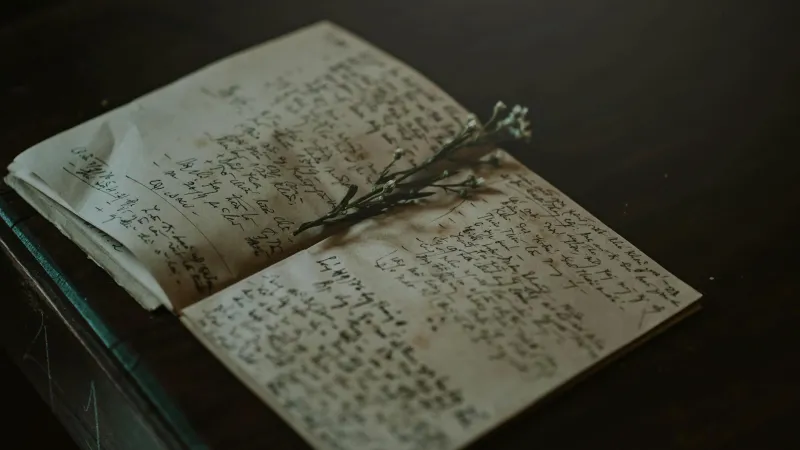
The Discovery That Started It All
When Rebecca Turner bought a vintage blazer from the Oxfam shop in Bath last October, she was simply looking for something smart for job interviews. What she found instead was a perfectly folded piece of paper tucked into the breast pocket, containing a 200-word story about a woman who found courage in unlikely places.
"I stood there in my kitchen, reading this tiny story about someone overcoming their fears, and I just started crying," Rebecca remembers. "Not sad tears – happy ones. It felt like receiving a message from the universe exactly when I needed it most."
The story was signed only with "A Friend You Haven't Met Yet," and it sparked something in Rebecca that would soon spread far beyond her Bath kitchen. She began writing her own pocket stories and leaving them in charity shops, library books, and café napkin dispensers across the city.
The Anatomy of a Pocket Story
These miniature narratives follow their own gentle rules. They're typically 100-300 words long, handwritten or typed on small pieces of paper, and designed to be discovered by strangers. The themes are universally uplifting: tales of kindness triumphing over cruelty, ordinary people doing extraordinary things, or simple reminders that someone, somewhere, believes in the reader's potential.
"I write them on my commute," explains Mark Davies, a postal worker from Cardiff who's been leaving stories around Wales for eight months. "I imagine the person who might find each one – maybe someone having a tough day, maybe a child who needs to believe in magic, maybe an elderly person feeling forgotten. Then I craft something just for them."
The hiding places are as creative as the stories themselves. Popular locations include:
- Pockets of donated clothes in charity shops
- Between the pages of library books (particularly self-help and fiction sections)
- Inside jigsaw puzzle boxes
- Tucked into the strings of guitars in music shops
- Slipped between the pages of magazines in waiting rooms
- Hidden in the compartments of second-hand handbags
A Growing Network of Joy
What began as isolated acts of creative kindness has evolved into an informal network spanning Britain. Social media groups with names like "Pocket Tale Society" and "Story Seeders UK" have emerged, where participants share photos of their hiding spots (without revealing exact locations) and celebrate stories from people who've found their literary gifts.
"We're very careful not to spoil the magic," emphasises Emma Richardson, who administers the largest Facebook group for story-leavers. "We never post specific locations or times. The whole point is that these discoveries should feel serendipitous, like finding a four-leaf clover."
The movement has attracted participants from all walks of life. Teachers leave stories in school libraries, nurses tuck them into hospital magazines, and even some politicians have been spotted (though never officially confirmed) placing folded tales in constituency office waiting areas.
The Psychology of Anonymous Giving
Dr. Katherine Walsh, a psychologist specialising in altruism at Edinburgh University, finds the phenomenon fascinating. "There's something particularly pure about anonymous giving," she observes. "The story-leavers can't receive thanks or recognition, so their motivation must be genuinely altruistic. And for the finders, there's no social obligation to respond or reciprocate – they can simply enjoy the gift."
 Photo: Edinburgh University, via c8.alamy.com
The anonymity also allows for remarkable vulnerability in the stories themselves. Many tackle difficult subjects – loneliness, anxiety, loss – but always with a gentle touch and hopeful resolution.
"I wrote about my experience with postnatal depression," shares a story-leaver who wishes to remain anonymous. "I turned it into a tale about a new mother who discovered that asking for help was actually a superpower, not a weakness. I left it in a pregnancy book at the library, hoping it might reach someone who needed to hear that message."
Unexpected Discoveries
The responses from finders have been overwhelmingly positive. Many take to social media to share their discoveries (whilst carefully avoiding specific details about locations), creating a beautiful feedback loop of gratitude and inspiration.
Jenny Morrison, a student from Glasgow, found a story about resilience tucked inside a cookbook she'd borrowed from the library. "I was going through a really difficult time with my dissertation," she explains. "Finding this little story about a chef who kept trying new recipes despite constant failures felt like a sign. It reminded me that persistence isn't about never failing – it's about never giving up."
Some discoveries have led to life-changing moments. A teenager in Manchester found a story about courage in a charity shop jacket pocket on the same day he was contemplating coming out to his parents. "It wasn't directly about being LGBTQ+," he explains, "but it was about being brave enough to live authentically. I carried that piece of paper with me when I had the conversation with my mum and dad."
The Craft Behind the Magic
Creating effective pocket stories requires a particular skill. Writers must capture complete emotional journeys in very few words, create characters readers can connect with instantly, and craft endings that feel both satisfying and hopeful.
"I've learned to write like I'm offering a friend a cup of tea," says Sandra Phillips, a retired teacher from York who's been crafting pocket stories for over a year. "Warm, welcoming, and exactly what they need in that moment."
Many story-leavers have developed signature styles. Some specialise in modern fairy tales, others in slice-of-life moments, and a few focus on gentle science fiction that imagines better futures.
Inspiring New Writers
Perhaps the most beautiful aspect of this movement is how it's encouraging people who've never written creatively to pick up a pen. The constraint of writing very short stories feels less intimidating than attempting a novel, and the anonymous nature removes the fear of judgement.
"I was terrified of writing before this," admits Tom Bradley, a mechanic from Liverpool. "But knowing that my stories might genuinely help someone gave me courage. I've written over fifty pocket tales now, and I think I might even try entering a proper short story competition soon."
Several participants have gone on to join writing groups, start blogs, or even publish their own work. The pocket story movement has become an unexpected gateway into the broader world of creative writing.
The Future of Hidden Stories
As the movement grows, participants are dreaming up new ways to spread literary joy. Some are experimenting with seasonal themes – leaving Christmas stories in December, tales of new beginnings in January. Others are creating themed collections for specific locations, like stories about healing for hospital waiting rooms or tales of adventure for travel hubs.
"We're proving that literature doesn't need grand gestures or official platforms," reflects Rebecca Turner, whose charity shop discovery started her own journey into story-leaving. "Sometimes the most powerful stories are the ones that find us exactly when we need them, tucked away in the most ordinary places."
In a world that often feels disconnected and hurried, these tiny acts of creative generosity remind us that magic still exists – not in grand gestures, but in the simple human desire to share hope with strangers. Every pocket story is a reminder that somewhere out there, someone believes our story deserves a happy chapter.
As one particularly beloved pocket story concludes: "You are the protagonist of your own adventure. Make it a good one."