More Than the Plot: The Intimate British Book Gatherings Where Stories Open Doors to Real Life
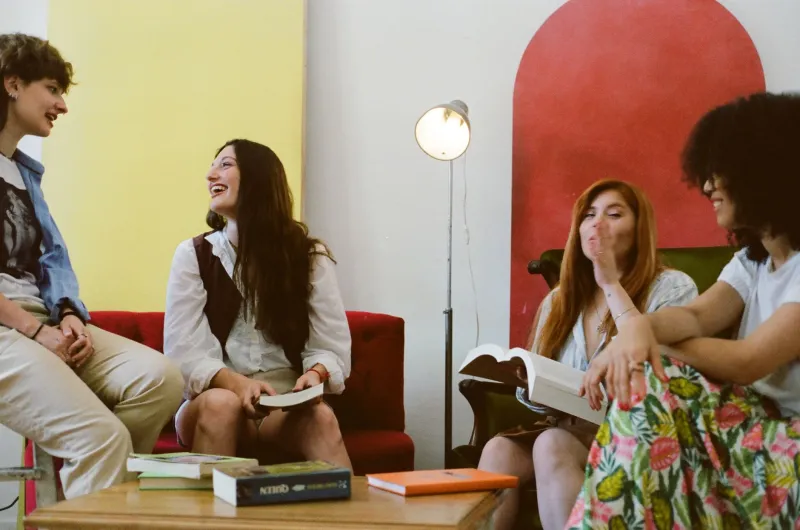
Across Britain, a new kind of book club is quietly flourishing — one where the novel is just the starting point. These are spaces where people talk about loneliness, identity, and what it means to belong, using stories as a gentle key to unlock conversations they couldn't have any other way. We went inside some of them.
When the Book Becomes a Bridge
Traditional book clubs have always had a kind of charm — the biscuits, the wine, the heated arguments about whether the ending was satisfying. But something is shifting in how groups of readers are choosing to gather. Increasingly, the literary analysis is taking a back seat, and something rawer, more human, is moving into the foreground.
In a community centre in Sheffield, a group of twelve women meets on the second Thursday of every month. They read the same book, yes. But when they sit down together, the question they begin with isn't "what did you think of the writing?" It's something closer to: "Where did this story touch you?"
"We had a book about a woman caring for her elderly father," says group founder Diane, 52. "We spent maybe ten minutes on the actual novel. The rest of the evening was people talking about their own parents, their own fears about getting older, their own guilt. One woman hadn't spoken about her grief in years. She said the book gave her a way in."
The Loneliness Nobody Talks About
Britain has a loneliness problem that rarely makes the headlines in the way it should. It's not just the elderly living alone — it's the young professional who moved cities for work and hasn't found their people yet. It's the new parent whose world has shrunk to four walls and a feeding schedule. It's the person who looks, from the outside, like they have everything sorted.
Book groups are quietly becoming a lifeline for exactly these people. Not because they're therapy — most would resist that label — but because they offer something therapy doesn't always provide: the warmth of ordinary community, held together by a shared story.
In Bristol, a group called Chapters & Chairs was started two years ago by a social worker named Tom who noticed how isolated many of his clients felt after their formal support ended. "I thought — what if we just read together? What if stories were the excuse to keep showing up for each other?"
The group now has a waiting list. Members range from 19 to 71. They read across genres — literary fiction, memoir, even the occasional graphic novel. What stays consistent is the culture: no one is required to have finished the book, no one is judged for going off-topic, and the kettle is always on.
Identity on the Page, Identity in the Room
One of the most powerful things a book can do is make you feel less alone in who you are. And when that happens in a group setting — when someone says "I felt that too" — the effect is multiplied in ways that are difficult to articulate but impossible to mistake.
A reading circle in east London, focused specifically on literature by writers of colour, has become something its members describe as transformative. "We're not just discussing books," says Amara, one of the founding members. "We're discussing ourselves. Our families. The things we were taught to be ashamed of and the things we've reclaimed. The book is almost like a permission slip to go there."
This isn't unique to any one community. Across the country, LGBTQ+ reading groups, groups for men (still relatively rare, and all the more valuable for it), groups for people navigating grief or illness — all are finding that stories create a kind of neutral ground where difficult conversations become possible.
The Grassroots Magic of Small Spaces
What's striking about these gatherings is how deliberately small and local they tend to be. This isn't a branded movement with a headquarters and a newsletter (though some have grown into that). It's people deciding, quietly and practically, that they want more genuine human connection — and using books as the mechanism.
In Edinburgh, a group meets in the back room of a bakery on Sunday mornings, nursing coffees and pastries while working through memoirs about mental health. In rural Shropshire, a WhatsApp group of six neighbours evolved into a monthly meeting that has, according to one member, "saved my sanity through two winters."
The common thread is intimacy. These aren't spaces designed to impress. They're designed to hold.
Why Stories Work Where Words Alone Don't
There's something about fiction and memoir that lowers our defences in a way that direct conversation often can't. When we talk about a character's loneliness, we're also, quietly, talking about our own. When we discuss a fictional family's dysfunction, we find language for dynamics we've never been able to name in our own lives.
Reading therapists and bibliotherapists — a growing field in the UK — have long understood this. But you don't need a qualification to notice it working around a kitchen table.
"The book is like a third person in the room," says Diane from Sheffield. "It takes the pressure off. Nobody has to be brave first. The story is brave for you."
Showing Up, Chapter by Chapter
If there's one thing these groups share, it's a belief in the radical power of simply showing up — for stories, and for each other. In a world that can feel increasingly fragmented and fast, there is something quietly extraordinary about a room full of people who chose to be there, who chose a book and each other, who are willing to sit with the parts of the story — and of themselves — that are still unresolved.
That's not literary criticism. That's something much more important.