Ghost Ink: The Unexpected Magic of Other People's Notes in Secondhand Books
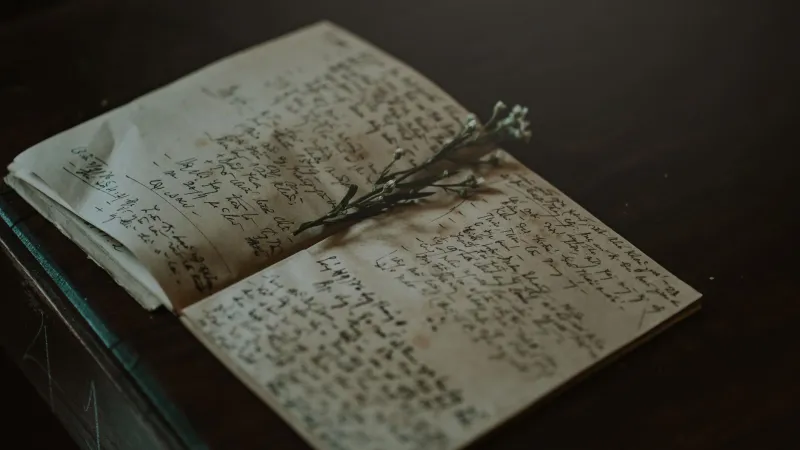
Somewhere in a charity shop in Shrewsbury, right now, there is a book waiting for you. It might be a battered Penguin classic or a forgotten airport thriller. And somewhere in its pages, pressed between the words, is a trace of someone else's life — a pencilled underline, a date scrawled in fading biro, perhaps a bus ticket used as a bookmark that was never reclaimed.
For a particular kind of reader, this is the whole point.
"I almost never buy a new book if I can help it," says Beth Calloway, 41, a librarian from Hereford. "Not because of the money, though that helps. Because new books are empty. Secondhand books have been somewhere. They've been someone."
The Archaeology of the Margins
Annotations in secondhand books are as old as books themselves. Medieval monks filled manuscripts with comments that ranged from theological insight to complaints about the cold. Samuel Taylor Coleridge was a notorious marginal scribbler. Virginia Woolf wrote in her books constantly, and scholars have spent careers poring over what she left behind.
But the notes that Beth and thousands of other UK readers are treasuring aren't from literary giants. They're from ordinary people — students, grandparents, someone who loved a particular line enough to underline it twice, someone who disagreed so strongly they wrote "NO!!" in the margin and underlined that too.
"I found a copy of Rebecca in an Oxfam in Bath," recalls Jamie Northcott, 29, a postgraduate student in Bristol. "Someone had gone through the whole thing and written tiny comments throughout — 'she suspects here', 'this is the turning point', 'why does she stay?' It read like a conversation. I genuinely felt bereft when I finished the book because I'd run out of their thoughts."
The experience Jamie describes — that sense of intimate connection with an unknown reader — is something researchers in reader response theory have written about extensively. But you don't need an academic framework to feel it. It simply feels, as Beth puts it, "like finding a letter that was meant for you after all."
The Things People Leave Behind
It isn't only annotations. British charity shops and secondhand bookshops are filled with books carrying unexpected stowaways: handwritten shopping lists, birthday cards, photographs, receipts from long-closed restaurants, letters — sometimes love letters — tucked between pages and apparently forgotten.
Helen Marsh, who runs a small independent bookshop in York, has been quietly documenting her most remarkable finds for years. "A photograph of a couple on their wedding day in a copy of Middlemarch. A child's drawing in a book of Keats. A note that just said 'I forgive you' in a thriller — no name, no date, nothing else." She pauses. "That one stayed with me for months."
Online communities dedicated to sharing these discoveries have grown steadily across the UK. Instagram accounts, Reddit threads, and Facebook groups with names like "Found in a Secondhand Book" attract tens of thousands of followers who post their finds with something close to reverence. There's an unspoken understanding in these communities: this is sacred territory. These are real people's real moments, accidentally preserved.
Why It Matters More Now
There's an argument — and it's a persuasive one — that the emotional pull of marginalia has intensified in direct proportion to our digital lives. When almost all our communication is typed, autocorrected, and stored in a cloud owned by a corporation, handwriting feels almost shockingly personal.
"Handwriting is irreducibly human," says Dr. Marcus Webb, a literary historian at the University of Sheffield. "It carries the physical trace of a specific person — the pressure of their hand, their particular loops and slants, the speed they were moving at. You can't fake that. When you encounter it in a book, you're encountering a body."
In a world where the average British person sends dozens of messages a day but writes almost nothing by hand, there's something quietly startling about picking up a book and finding that someone, somewhere, once pressed a pen to paper and cared enough to leave a mark.
The Ethics of the Found Note
Not everyone is comfortable with the intimacy. Some readers report feeling voyeuristic, uncertain whether they should be reading what was clearly never intended for them. A letter tucked into a book is, after all, a private thing.
"I found what was obviously a love letter once," says Jamie. "Very personal. I read the first few lines and then stopped. It felt wrong. I left it in the book." He smiles. "Someone else will find it. Maybe it'll mean something to them."
This is part of the unspoken ritual — the sense that these objects have their own journeys, their own trajectories through time and through hands. To find one is to be briefly part of that journey. To pass it on is to keep it moving.
Helen keeps a small box behind her shop counter for the most significant finds — the ones too precious to be left in a book that might be sold again before the right reader comes along. "I don't quite know what I'll do with them eventually," she admits. "But it feels important to keep them safe. They're someone's story."
The Bliss of the Unexpected
Perhaps what makes marginalia so moving is precisely its randomness. Nobody planned for you to find it. Nobody curated this moment. It's a purely accidental gift from a stranger across time — a reminder that other people have sat with the same words you're sitting with, have been moved or puzzled or delighted by the same pages, have pressed a pen to paper in the small act of saying I was here, I felt this.
Beth is still buying secondhand books. She's still finding things in them. Last week, a pressed flower in a copy of Ted Hughes. The week before, a child's name and age written in careful, proud letters on the inside cover of a picture book long since outgrown.
"Every book has a life before you," she says. "That's not a flaw. That's the whole gift."