All Aboard the Story Express: Why Britain's Train Commuters Are Becoming Its Most Prolific Writers
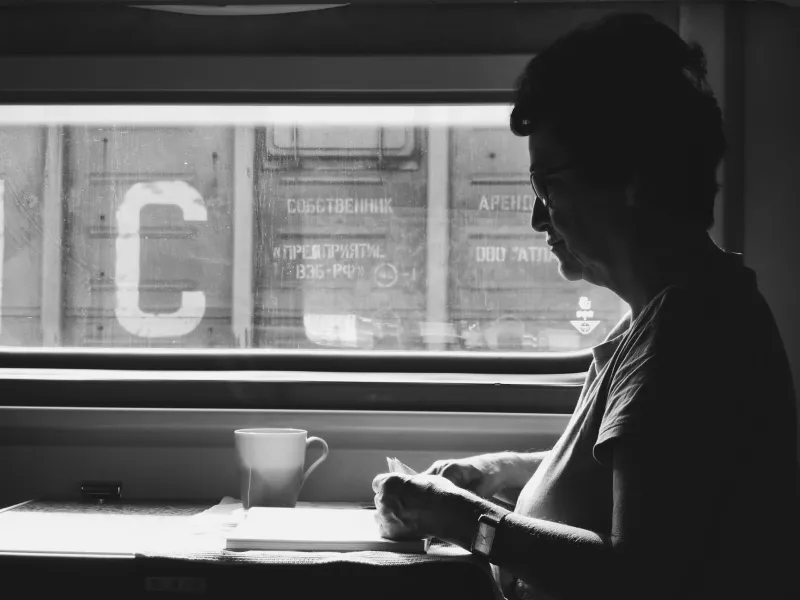
Danielle Okafor has published two novels. Both of them were written, in significant part, on the 07.52 from Bristol Temple Meads to London Paddington. Her word count goal is modest: 300 words each way. Her total, over three years of commuting, runs to several hundred thousand.
"People ask me when I find the time to write," she says, laughing. "I tell them I'm given it. The train gives it to me."
Danielle is not unusual — or rather, she is unusual only in having gone to print. Across the UK, a quiet and growing population of commuters has decided that the daily journey, long regarded as dead time to be survived, is actually something far more interesting: enforced creative solitude, delivered by National Rail five days a week.
The Peculiar Freedom of Going Nowhere Useful
There is something genuinely strange about the mental state a long train journey produces. You are moving, but you have no agency over the movement. You are surrounded by people, but social convention releases you from any obligation to engage with them. Your phone signal drops in and out. The scenery rolls past. And your mind, deprived of its usual fidgeting options, does something unexpected: it opens.
Psychologists have a name for this. "Involuntary attention" — the light, effortless awareness that comes when the environment provides just enough gentle stimulation to keep the restless brain occupied, freeing the deeper imaginative faculties to roam. It's the same state that produces ideas in the shower or on a long walk. Trains, it turns out, are exceptionally good at inducing it.
"The rhythm helps," says Marcus Fielding, a secondary school teacher from Manchester who has been writing poetry on the trans-Pennine route for four years. "There's a physical regularity to it — the vibration, the sound of the wheels. It's almost meditative. I find I access images and lines on the train that I can't get sitting at a desk."
A Long and Honourable Tradition
Britain's railways and its literary culture have always been entangled. Agatha Christie famously plotted on trains. Arthur Conan Doyle wrote on journeys. The great Victorian circulating libraries were partly built around the captive readership of rail passengers. W.H. Auden wrote his poem 'Night Mail' as a tribute to the postal express, and something of that romantic association between trains and language has never quite left us.
What's newer is the democratisation. The writers on today's trains aren't literary celebrities — they're accountants and nurses and students and retired civil servants, opening notebooks or tapping carefully into phones and laptops, building fictional worlds between stations.
Nick Harding, 45, an IT consultant from Edinburgh, finished his first short story collection entirely on the East Coast Main Line. "I'd always said I wanted to write but never had the time. Then I started commuting to London monthly for work, and there were suddenly these four-and-a-half-hour blocks with nothing to do but think. I didn't plan it. I just started."
His collection was published by a small Edinburgh press last year. His author biography reads, in part: "Written mostly between Edinburgh and King's Cross."
Practical Magic: Writing on the Move
For those inspired to try, the commuter writers of Britain have developed their own accumulated wisdom.
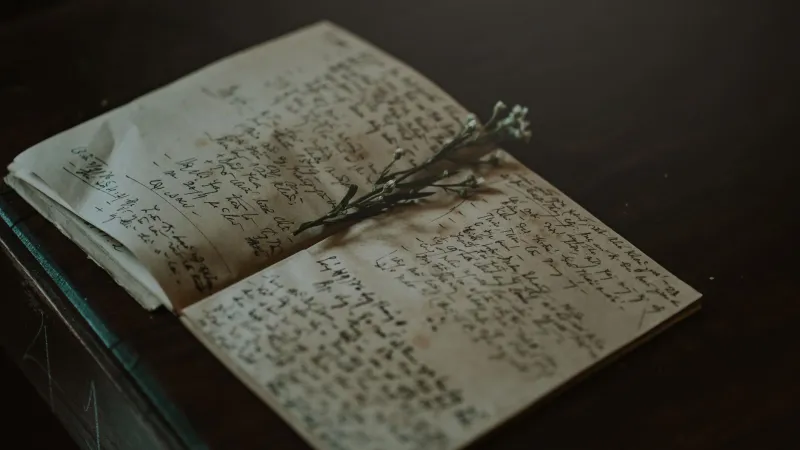
Notebook versus screen. Opinion is divided, but many writers prefer a notebook for first drafts on trains. It's more portable, doesn't require wifi, and the lack of a backspace key prevents over-editing in the moment. Others swear by a simple notes app. The key, most agree, is consistency of tool — using the same method every journey builds a Pavlovian association between the train and the writing brain.
Lower your ambitions. Danielle's 300-word target is deliberately modest. "If I aimed for 1,000 words, I'd feel defeated on the days I only managed 200. Three hundred words is almost always achievable, even on a crowded train with someone's elbow in my ribs."
Use the journey's natural rhythm. Several writers describe using specific stations as structural markers — a scene change when the train crosses the Severn, a chapter break at Peterborough. The geography of the journey becomes embedded in the work.
Embrace the eavesdropping. "I've stolen so many lines from conversations on trains," admits Marcus, without apparent guilt. "Not verbatim — but the cadence, the particular way someone phrases something. You can't get that sitting alone in a room."
Protect the time fiercely. The greatest threat to train writing isn't noise or interruption — it's the phone. Every writer interviewed for this piece mentioned the same discipline: putting the phone away, or at least on aeroplane mode, for at least part of the journey. "The train gives you the solitude," says Danielle. "You have to actually take it."
The Landscape as Collaborator
There's one element of train writing that no other environment can replicate: the view. Britain's rail network, for all its well-documented frustrations, passes through some of the most quietly beautiful landscape in the world — the Pennines in winter light, the Somerset Levels at dawn, the Scottish Highlands in any season at all.
"I look up a lot," says Nick. "Sometimes I'm looking up more than I'm writing. But I think it's all the same process. The landscape goes in and something comes out later."
This is, perhaps, the quiet gift that Britain's trains are giving their most attentive passengers. Not just time, but beauty. Not just silence, but the particular generative quality of moving through a world you're not responsible for managing, watching it pass, and finding that words, unbidden, begin to arrive.
The 07.52 from Bristol is pulling into Paddington. Danielle closes her notebook. Three hundred and forty words today — a good morning. She'll do the same on the way home.
"People think commuting is wasted time," she says, tucking the notebook into her bag. "I think it might be the best time I have."