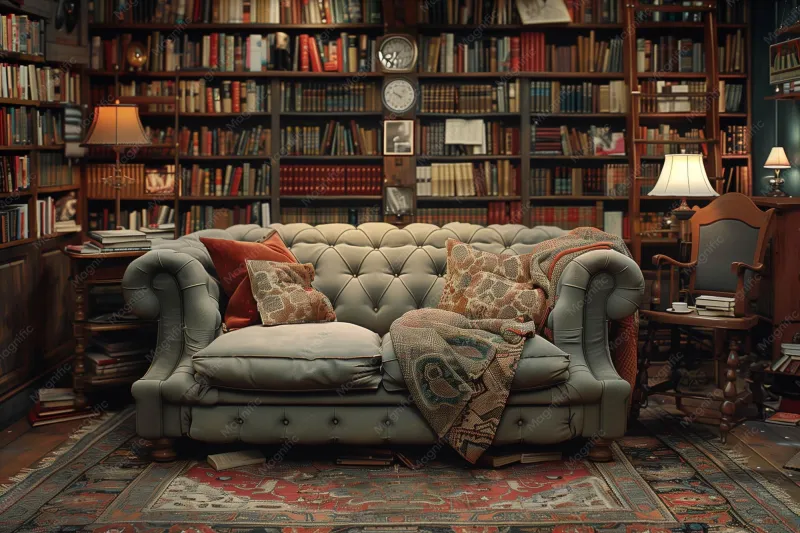
Last Orders for Loneliness: The Pubs Turning Their Dusty Shelves into Book-Swapping Sanctuaries

Photo by Photo by Jonathan Gong on Unsplash on Unsplash
The British pub has been declared dead so many times that it's developed a certain immunity to the obituary. And yet here it is, doing what it has always done best: adapting, absorbing, and quietly making people feel less alone. Only this time, the secret weapon isn't a new craft ale or a quiz night. It's a dog-eared paperback propped on a windowsill with a handwritten note that reads: Take me. Leave one if you like. Or don't. No pressure.
Across Britain — from Cornish fishing villages to Sheffield side streets, from Highland hamlets to Hackney high roads — a gentle, grassroots movement is turning the nation's favourite communal spaces into something new: informal literary sanctuaries where books spark conversations, bridge generations, and quietly push back against the epidemic of loneliness that has settled over so much of modern life.
How It Starts: A Shelf, a Few Books, and a Bit of Hope
Nobody planned this. That's perhaps the most charming thing about it. There was no national campaign, no government initiative, no app. It started, in most cases, the way the best things do — with one person and a good idea.
At The Woolpack in a small village outside Kendal, landlady Jean placed six paperbacks on the deep stone windowsill beside the fireplace about three years ago. "I'd been to a Little Free Library in the village and thought — why not do something similar in here? We've got all this space that just collects dust and old menus."
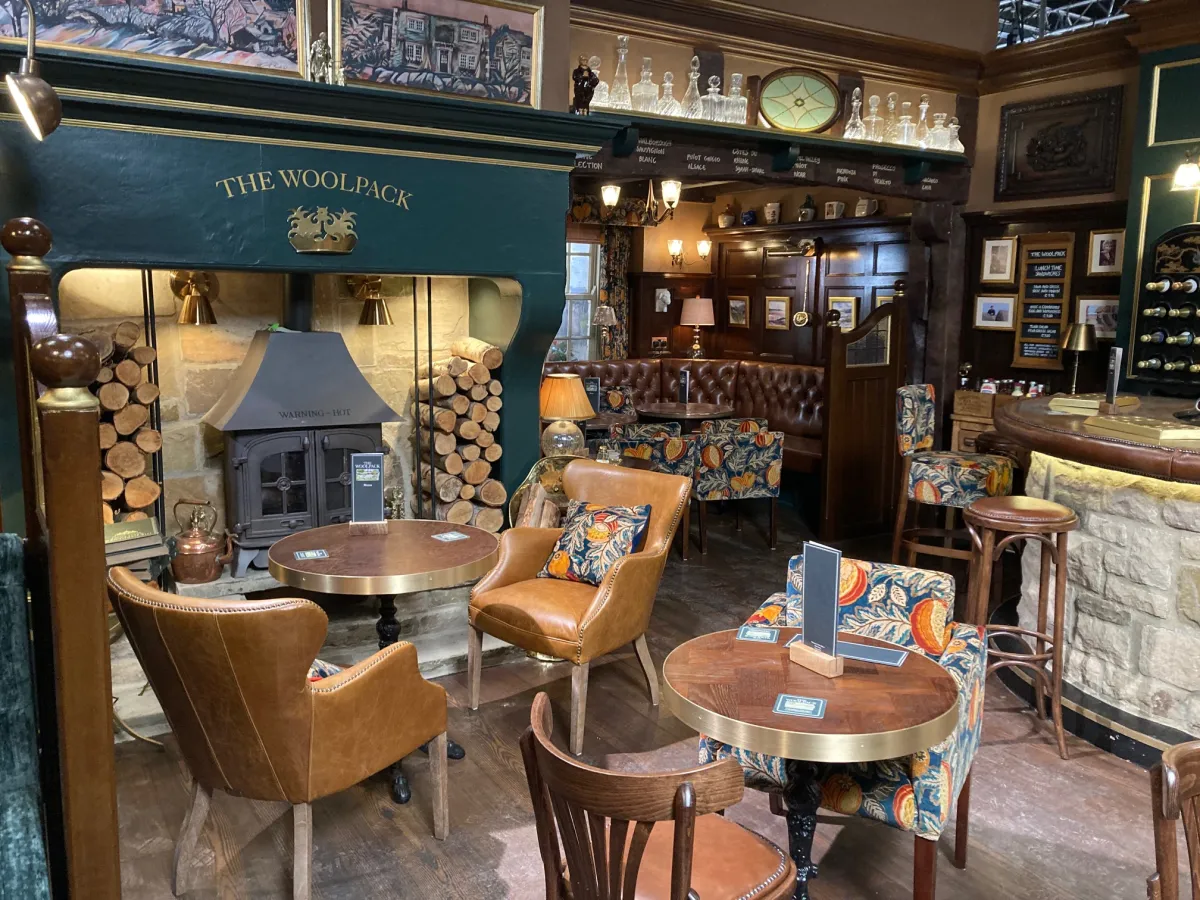 Photo: The Woolpack, via images.ctfassets.net
Within a fortnight, the six books had become fourteen. A regular left a carrier bag of crime thrillers. Someone's daughter dropped off a box of children's books "for the families that come in on Sundays." A retired teacher began adding handwritten recommendations on Post-it notes stuck to the covers. The windowsill became a shelf. The shelf became two.
"The funny thing is," Jean says, "it's not really about the books. It's about what the books give people permission to do — which is talk to each other."
Strangers, Stories and the Space Between Them
There's something about a book that functions as a social permission slip in a way that few other objects manage. You can admire someone's pint without comment, but pick up the same book they're eyeing on the shelf and you've already got the beginning of a conversation.
At The Hob in Forest Hill, south London, regular Kwame first spoke to his now-close friend Patricia because they both reached for the same Toni Morrison novel on the pub's alcove shelf on the same rainy Tuesday evening. "We ended up talking for two hours," he says. "I'd been coming in here for a year and never said more than 'cheers' to anyone. One book changed that."
 Photo: The Hob, via qhrenderpic-cos.coohom.com
This kind of accidental connection — the sort that used to happen more naturally when communities were less fragmented — is precisely what pub book shelves seem to catalyse. Unlike a formal book club, there's no commitment, no syllabus, no pressure. You can pick something up, put it back, or simply let it sit there and enjoy the warmth of knowing it's available.
Rural Pubs and the Community Thread
In rural areas, where the pub often remains the last genuinely communal space in a village — the post office gone, the shop gone, the school sometimes gone too — the book shelf has taken on an almost totemic significance.
At The Red Lion in a small Oxfordshire village that asked not to be named ("we don't want to be overrun," the landlord explained, cheerfully), the shelving system has evolved into something quite remarkable. There's a section of local history books that never leave — donated by the village historical society and treated as a kind of permanent reference library. There's a children's corner beside the window that parents replenish seasonally. And there's what regulars call "the swap wall" — a corkboard where people pin notes about books they've loved and are looking to exchange.
 Photo: The Red Lion, via ih1.redbubble.net
"It's become part of how this village talks to itself," says regular Bridget, who has lived in the village for thirty years. "People leave recommendations for each other. There was a note up last winter from old Arthur — he must be eighty-five — recommending a poetry collection. Three people went and bought it. He was so pleased he cried a little bit, I think."
City Boozers Join the Quiet Revolution
It would be easy to imagine this as a purely rural phenomenon — cosy fires, stone walls, that sort of thing. But the movement has taken firm root in urban pubs too, often with a slightly different flavour.
In Leeds, The Packhorse on Woodhouse Lane has built its book collection around local and Northern writers, a curatorial decision that has made it a genuine gathering point for the city's literary community. In Edinburgh, a Leith pub has partnered with a nearby independent bookshop to run a monthly "blind date with a book" evening, where wrapped volumes with cryptic clues are placed on the shelf for customers to choose.
In Bristol, The Pipe and Slippers has taken things a step further, dedicating an entire back room corner to what they call the "Story Nook" — a cluster of mismatched armchairs surrounded by overflowing shelves, where solo drinkers can settle in without feeling conspicuous. "We noticed that people coming in alone were gravitating towards the corner anyway," says manager Roshani. "So we made it feel intentional. Like it was designed for you. Now it's the most popular spot in the house."
What the Books Are Really Doing
Pub book shelves are, at their most practical, a lovely thing — free reading material, a bit of character, a conversation starter. But the people who love them most tend to speak about them in terms that go deeper than convenience.
For isolated older people, they offer a reason to linger a little longer in company. For young parents arriving frazzled on a weekend afternoon, the children's books are a small mercy. For the person who comes in alone and isn't quite sure how to begin belonging, a book on a shelf is a quiet signal: you are welcome here, and there are things here worth discovering.
The British pub, for all its complications and contradictions, has always been fundamentally about that — about belonging. The books, it turns out, are just the latest way it's making good on that promise.
So next time you're in your local, have a look around. There might be something waiting on that windowsill that was put there just for you.