Never on Loan: The Beloved British Tradition of the Books You Guard with Your Life
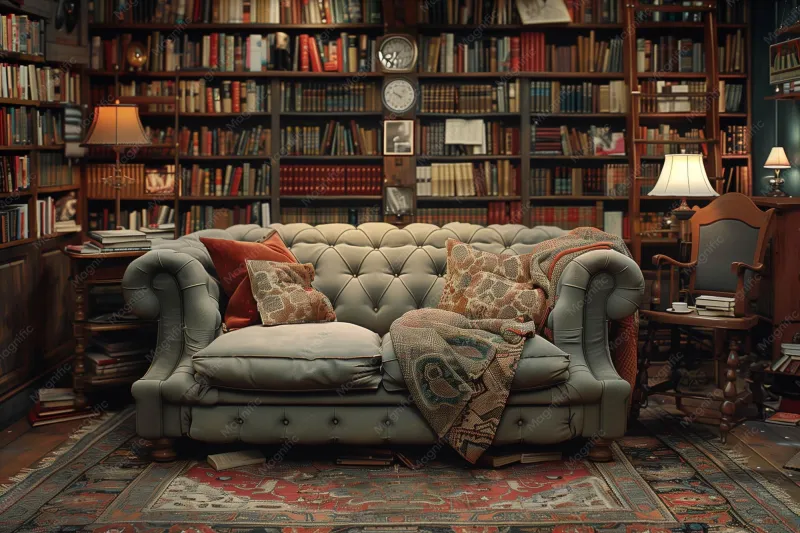
Photo: cosy bookshelf beloved books home UK reader comfort, via img.freepik.com
Let's be honest with each other. You have one. A shelf — or perhaps just a corner of a shelf, or a particular stack on your bedside table — where the truly untouchable ones live. The books you'd sooner claim you'd never read than hand over to a friend who might dog-ear the pages, spill tea on the spine, or — the worst fate of all — simply never return it.
You feel a little guilty about it. You probably shouldn't.
Across Britain, readers are increasingly unapologetic about their keeper shelves: those personal collections of volumes that exist entirely outside the generous ecosystem of borrowing and recommending and pressing books into people's hands. These are the books that stay. And the reasons they stay reveal something deeply tender about how we relate to the stories that have shaped us.
What Makes a Book a Keeper?
It's rarely about monetary value. First editions and signed copies certainly earn their place on the protected shelf, but the books British readers guard most fiercely are almost never the expensive ones. They're the battered paperbacks with cracked spines. The childhood copies with names written inside in wobbly pencil. The novels read during hospital stays, heartbreaks, or those particular seasons of life when everything felt uncertain and one story somehow held you together.
"It's not really about the book," says Caroline, a secondary school teacher from York who has maintained what she calls her 'sanctuary shelf' for over fifteen years. "It's about who I was when I read it. My copy of I Capture the Castle has my nineteen-year-old self inside it. I can't lend that out. That's not a book anymore — that's a piece of me."
This sense of a book as container — holding not just a story but a specific emotional moment in the reader's life — is something bibliotherapists have long recognised. The physical object becomes inseparable from the experience of reading it. The yellowed pages, the particular smell, even the coffee ring on the back cover: all of it is data. Evidence of a life being lived.
The Ones That Got Away
For many keeper-shelf devotees, the collection was born of loss. Specifically, the loss of a beloved book to the great, indifferent borrowing void from which nothing ever returns.
"I lent my copy of The Secret History to a friend in 2003," says James, a graphic designer from Bristol, with the weary composure of a man who has made his peace with something. "I've bought three copies since. But none of them are my copy. So now I have a rule: I'll buy you your own copy. I'll even wrap it. But mine stays on the shelf."
This practice — buying a duplicate to give away rather than surrendering the original — has become something of an art form among committed keeper-shelf keepers. It is, in its way, an act of generosity. You're sharing the story. You're simply protecting the memory.
Helen, a retired librarian from Inverness, laughs warmly at the irony of her situation. "I spent thirty-five years encouraging people to borrow books. And I have a shelf at home that I would absolutely not let any of those people touch. There's a difference between a book that belongs to everyone and a book that belongs to you. I know that better than most."
The Stories Behind the Shelf
Ask someone about their keeper shelf and you'll quickly find yourself somewhere far more personal than a conversation about literature. You'll be in the room where they cried for the first time over a story. You'll be in the hospital waiting room, the student bedsit, the difficult marriage, the glorious summer that changed everything.
Susan from Cardiff keeps a slim volume of Mary Oliver poetry that her late mother gave her on her thirtieth birthday. The inscription inside is brief — just three words — but Susan can't read it without feeling her mother in the room. "That book is not going anywhere," she says simply. "Ever."
For Rob, a paramedic from Newcastle, it's a dog-eared copy of Touching the Void that he read during his first year in the job, when the emotional weight of the work was threatening to overwhelm him. "Something about that story — about finding the will to keep going when everything says stop — I needed it then. I still need it now. It's not for borrowing. It's for keeping close."
These aren't just favourite books. They're what you might call emotional infrastructure — the volumes that have quietly held up some part of the reader's inner life for years, sometimes decades.
The Guilt, and Why You Should Let It Go
There is, of course, a faint cultural discomfort around book-hoarding. Readers, by nature, tend to be generous with stories. Recommending, gifting, pressing a novel into a friend's hands with an urgent "you have to read this" — these are among the great pleasures of literary life. Keeping a book entirely to yourself can feel, in that context, almost selfish.
But perhaps it needn't. There's a meaningful difference between withholding a story and protecting a relationship — and for keeper-shelf readers, that's exactly what they're doing. The relationship between a reader and a truly beloved book is one of the quieter, more sustaining intimacies available to us. Treating it with care seems not just reasonable but rather wise.
"People understand why you'd keep a photograph album private," points out Caroline. "A book that holds a memory just as powerfully — why would that be any different?"
Building Your Own Bliss Shelf
If you haven't yet named or acknowledged your keeper shelf, perhaps now is the moment. Look at your books with fresh eyes and ask yourself: which ones would cause you genuine distress to lose? Which ones carry a version of you inside them that no other copy could replicate?
Those are your keepers. Arrange them together. Give them the best spot on the shelf, the one with the nicest light. Let them be exactly what they are: not just books, but the most personal library you'll ever own.
And the next time someone reaches for one and asks, "Can I borrow this?" — smile warmly, tell them it's wonderful, and offer to buy them their very own copy.
Yours stays home.