The Bookmark That Never Moved: Why Leaving a Book Unfinished Might Be the Most Honest Thing You Ever Do
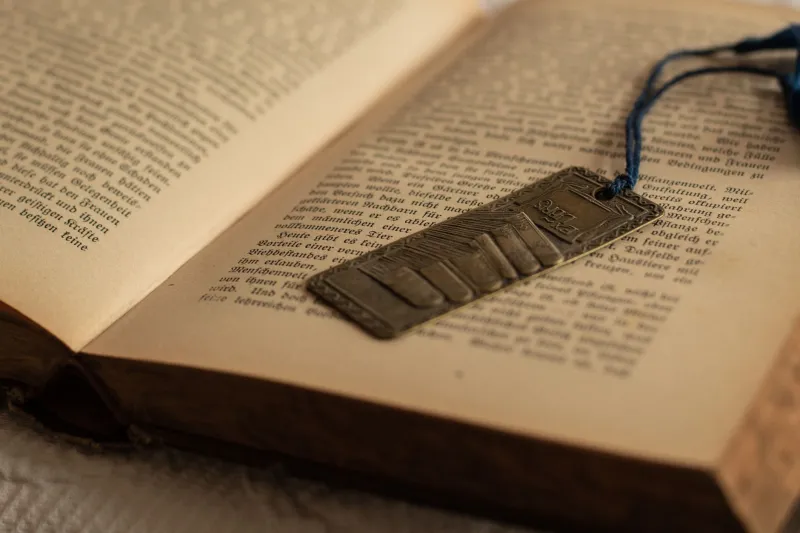
Page 112. That's where the bookmark has lived for approximately three years.
The novel in question — a much-praised literary debut that everyone seemed to love — sits on a shelf in a flat in Manchester, its spine slightly faded, its pages slightly yellowed at the edges. Its owner, Clare, 41, used to feel a needle of guilt every time she looked at it. "It's one of those books that 'everyone' has read," she says. "I'd start conversations about it and then have to admit I'd never actually finished it. Like I'd failed some kind of test."
Then, about a year ago, she stopped feeling guilty. Not because she finally finished it — she hasn't — but because she realised something. The reason she'd stopped reading it wasn't laziness or distraction. It was that she'd been going through something enormous at the time, and the book's particular flavour of melancholy, beautiful as it was, had simply been too much. She'd needed to put it down. And putting it down had been the right thing to do.
"That bookmark," she says now, "is basically a little monument to the year I was surviving. I don't need to move it."
The Guilt We Carry
British readers, on the whole, are a conscientious lot. There's a deeply ingrained cultural sense that if you start something, you finish it — and that applies to books with particular force. We feel oddly accountable to novels, as though the author might somehow know we abandoned them at chapter seven.
Reading challenges, annual 'books read' tallies, Goodreads shelves labelled 'did not finish' — all of these reinforce the idea that reading is, at some level, a performance of completion. You read the book. You finish the book. You move on to the next book. Anything else is a small, private failure.
But spend any time talking to readers about the books they haven't finished, and something interesting happens. The conversation gets richer. More specific. More honest. Because the reasons people abandon books are rarely about the book itself — they're almost always about the reader. About timing, about circumstance, about who they were at the exact moment they put it down.
A Map of Who You Were
James, a 52-year-old secondary school librarian from Nottingham, has kept every unfinished book he's ever owned. They have their own section of his shelves — what he calls, with affectionate irony, his 'honesty shelf.'
"Each one tells me something about a particular time in my life," he explains. "There's a philosophy book I abandoned in my late twenties when I was too angry to engage with ideas about acceptance. There's a novel I got halfway through just after my father died — I loved it, but I couldn't bear how good it was. There's a comedy memoir I started on a work trip when I was desperately unhappy in my job and just couldn't find anything funny."
He picks them up sometimes, not necessarily to read them but just to remember. "They're like photographs, in a way. Except instead of showing me what I looked like, they show me what I felt like."
This is, when you think about it, a remarkably sophisticated form of self-knowledge. The books we abandon reveal our emotional state with a precision that finished books rarely can. A completed novel tells you what you read. An abandoned one tells you where you were.
The Myth of Completion
There's a broader cultural reckoning happening here, one that extends well beyond bookshelves. The pressure to finish things — projects, courses, relationships, phases of life — is one of the more quietly exhausting features of contemporary existence. Completion has become synonymous with success, and incompletion with weakness or failure.
But life doesn't actually work that way. Most of the most meaningful things we do are ongoing, unfinished, perpetually in progress. Friendships don't conclude. Growth doesn't wrap up neatly. The person you are is not a completed text; it's a manuscript in constant revision.
Seen through that lens, the abandoned book isn't a failure. It's a perfectly accurate reflection of how life actually feels.
"I think there's something really freeing about accepting that not everything needs to be finished to have mattered," says Rachel, a 38-year-old yoga teacher from Brighton who has made something of a practice of sitting with her unfinished books. "I got about two thirds through a novel last year that was about a woman leaving her marriage. I was leaving a relationship at the time. I couldn't read any further. But I think about that book all the time. It helped me enormously. Does it matter that I never found out what happened?"
She doesn't think so. The book met her where she was. That was enough.
When Going Back Changes Everything
Of course, some abandoned books do eventually get finished — and the experience of returning to them, months or years later, can be extraordinary.
Clare, the woman with the bookmark on page 112, has tried returning to her novel once. She read about twenty pages. "It was completely different," she says, with some wonder. "Same words, obviously. But I was different. I found it funny in places I don't think I'd have found funny before. Less threatening. I might actually finish it this time. But I'm not going to force it."
That lack of force — that willingness to let a book arrive in your life when it's ready — might be the most mature relationship with reading it's possible to have. Books, like people, tend to reveal themselves more fully when you're not desperate for them to hurry up and be what you need.
James has returned to several books from his honesty shelf over the years. The philosophy book about acceptance, the one he abandoned in anger, he finally finished in his mid-forties. "I cried at the end," he says simply. "Not because it was sad, but because I understood it this time. And because I was so glad I'd waited."
Permission to Leave the Bookmark Where It Is
If you have a half-read book somewhere in your home right now — and statistically, you almost certainly do — this is your gentle reminder that it doesn't need to be finished to be valuable. It doesn't need to be anything other than what it already is: evidence of a particular you, at a particular moment, making a perfectly reasonable decision to put something down.
That bookmark, wherever it's sitting, is not a mark of failure. It's a marker of something far more interesting: the moment when you chose yourself over the obligation to finish. The moment when who you were becoming mattered more than completing the next chapter.
Leave it there as long as you like. Or pick the book up again when the time feels right. Or donate it to a charity shop so someone else can find it exactly when they need it.
Any of those choices is the right one. You don't need to finish the story to know that you're still writing yours.