Stories We Made Together: The British Families Quietly Writing Their Own History
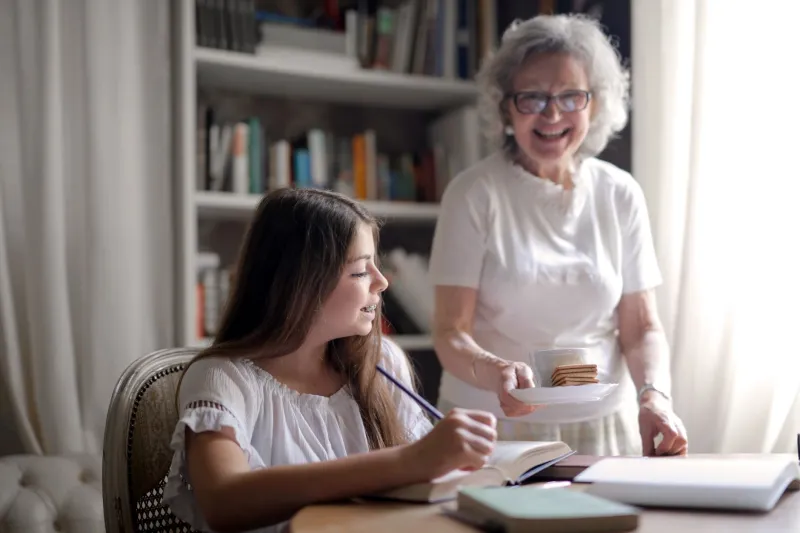
The notebook started as a joke. Margaret, 74, bought it at a car boot sale in Shropshire for 20p — a faded green hardback with 'ACCOUNTS' embossed on the cover — and left it on the kitchen table with a biro and a note that said: Write something down before you forget it.
That was three years ago. The notebook is now nearly full.
Her daughter has written about the day she got lost on the way to her own wedding. Her son-in-law has described, in careful detail, the smell of his grandmother's kitchen in Cork. Her teenage granddaughter has contributed a one-paragraph account of the family's disastrous camping trip to the Lake District, which has since become the most-read entry in the whole collection. And Margaret herself has filled several pages with stories about her late husband that her children had never heard before.
"We never called it anything fancy," Margaret says. "It's just the book. But when I think about what's in it now — all those voices, all those things that would have just disappeared — I can't quite believe we nearly didn't bother."
An Archive Made of Ordinary Things
What Margaret's family stumbled into has a name in some circles — collaborative memoir, family narrative, collective storytelling — but most of the people doing it haven't heard any of those terms. They're just writing things down because someone suggested it, or because a grandparent is getting older, or because a particularly good story was told at Christmas dinner and everyone agreed it shouldn't be lost.
Across Britain, in flats and farmhouses and suburban semis, small groups of people are creating their own archives. The methods vary enormously. Some families use shared notebooks passed between households. Others record voice memos on phones and transcribe them later — or don't bother transcribing at all, just keeping the audio files in a folder someone will hopefully find one day. Some have set up shared documents online, adding to them in real time across different cities and time zones.
A friendship group in Leeds have been meeting monthly for two years to write down stories from their twenties — the decade they all shared a series of increasingly chaotic house shares. "We thought we'd remember it all," says Priya, 38. "We don't. We've already forgotten things we thought were unforgettable. The writing sessions have basically become a rescue mission."
What Gets Written Down
The content of these homemade archives is wonderfully, gloriously ordinary. Which is precisely what makes them extraordinary.
There are recipes with annotations — not just the ingredients but the arguments about the ingredients, the variations that developed over decades, the year someone tried to modernise the Christmas pudding and was never quite forgiven. There are accounts of journeys: the first time someone drove on the motorway, the holiday where everything went wrong, the commute that somehow changed a life.
There are portraits of people who are no longer here. This is perhaps the most common thread — the impulse to set down, in someone's own words, what a person was actually like. Not the sanitised version that ends up in an obituary, but the real one: the habits, the sayings, the specific way they laughed.
A retired nurse from Glasgow spent six months interviewing her mother, now 91, for a document she's calling 'The Things Mum Knows.' It covers everything from wartime rationing to her mother's opinions on the current state of the NHS. "She's sharp as anything," says the nurse. "But she won't be here forever, and I kept thinking — who else knows this? Who else has asked her?"
The Kitchen Table as Writing Room
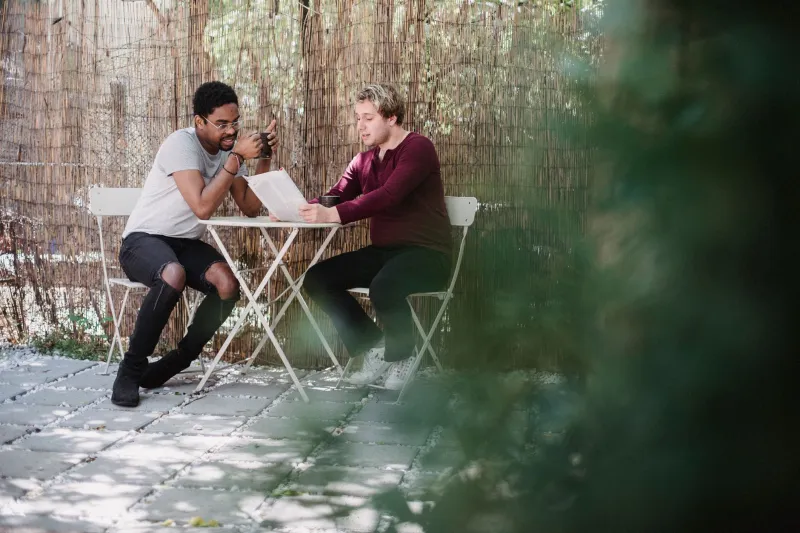
There's something about the kitchen table specifically that keeps coming up. It's the room where families are least performative, where guards come down, where conversations go somewhere unexpected because someone's making toast and nobody's quite paying full attention. The kitchen table, it turns out, is an excellent place to ask someone about their life.
These late-night writing sessions — often starting with one person saying 'do you remember when' and ending two hours later when someone realises the tea's gone cold — have a quality that more formal approaches to memoir-writing rarely achieve. They're loose and funny and digressive. They contradict themselves. Different family members remember the same event completely differently, and rather than editing for consistency, the best of these archives simply let the contradictions stand, side by side.
"That's actually the most honest thing about it," says Priya. "Nobody's trying to be the definitive version. We're all just adding our bit."
Legacy Without the Grand Gesture
None of the people involved in these projects describe themselves as writers. That's rather the point. These aren't literary endeavours — they're acts of love, dressed up as something practical.
What they're building, without necessarily framing it this way, is a form of legacy that doesn't require anyone to be famous or remarkable or to have done anything historically significant. These are archives of ordinary lives, which is to say, lives that mattered enormously to the people living them and to the people who loved them.
Margaret's green notebook will probably never leave the family. It won't be published or digitised or preserved in any official sense. But her granddaughter, who wrote the camping trip paragraph with the eye-rolls of a fifteen-year-old, will one day be glad it exists. And her children after that.
That's the quiet magic of it. You don't need a publisher or a platform or a particularly dramatic life story. You just need a table, a few people who know each other well, and something to write with.
The rest takes care of itself.