Verse and Sandwiches: Why Britain's Office Workers Are Trading Doom-Scrolling for Poetry at Lunchtime
Photo: Geoff Charles, CC BY-SA 4.0, via Wikimedia Commons
The Unlikely Revolution Happening on Your Lunch Break
It starts, usually, with one person. Someone who scribbles lines into a notebook on the Tube, who dog-ears collections of Seamus Heaney, who once studied English at university and then somehow ended up in accounts payable. They pin a small notice in the kitchen — Poetry at lunch, Tuesday, meeting room 3, bring your own biscuits — and wait, half-expecting nobody to come.
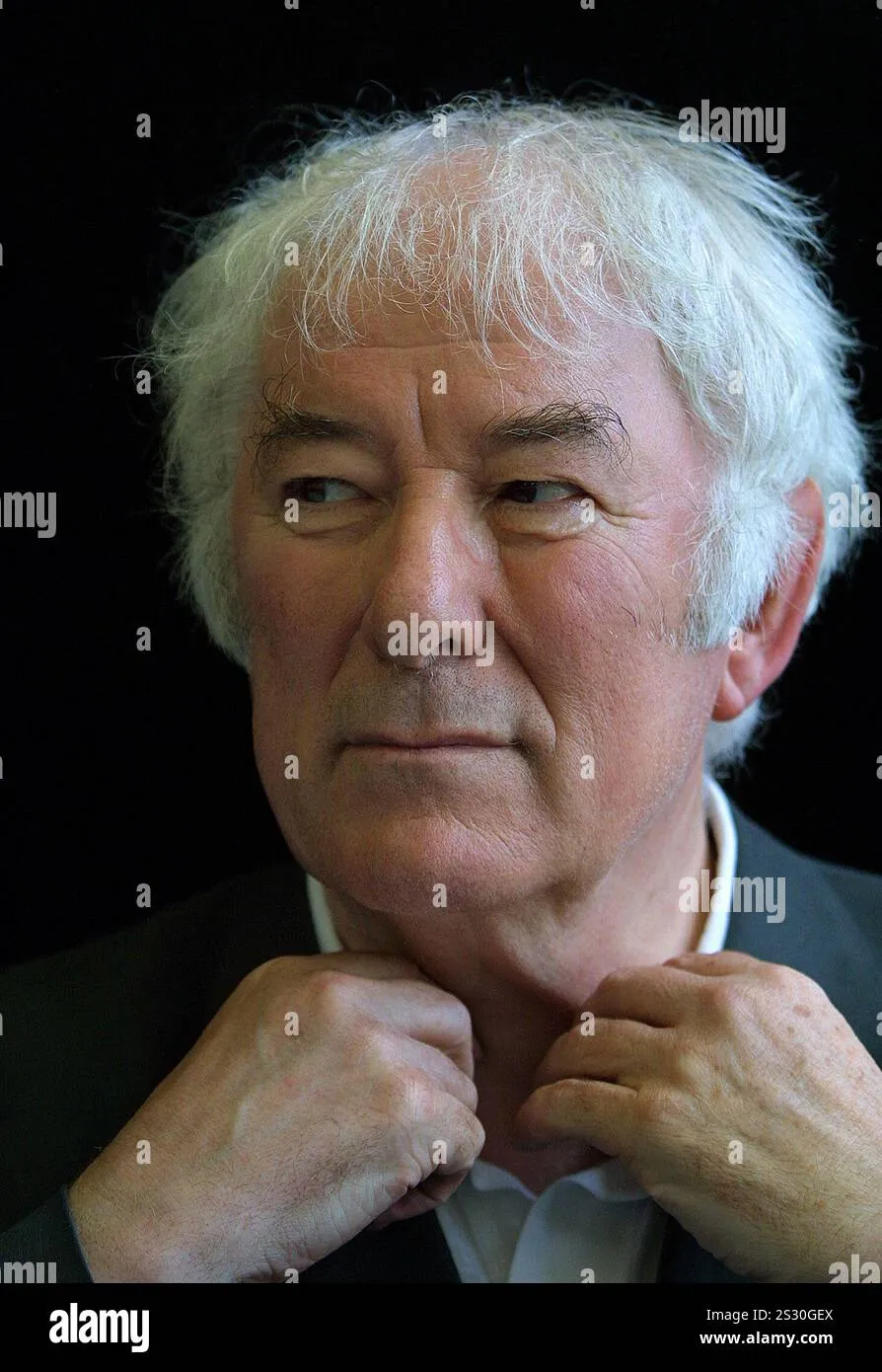 Photo: Seamus Heaney, via c8.alamy.com
Somebody always comes.
Across Britain right now, a quiet, rather beautiful phenomenon is unfolding inside offices, hospitals, council buildings, and warehouses. Workplace poetry clubs — informal gatherings where colleagues read verse aloud, share their own writing, and occasionally argue warmly about whether rhyme schemes matter — are multiplying in ways that would have seemed faintly absurd a decade ago. And the people turning up aren't the ones you might expect.
From the NHS to the City: Who's Actually Showing Up
At a large NHS trust in Leeds, a poetry club called The Prescription meets every Wednesday in a room usually reserved for mandatory training. It was started eighteen months ago by Diane, a ward administrator in her early fifties, after she noticed that her colleagues were arriving at work already depleted and leaving it hollow.
"We were all just grinding through," she says. "Lunch was something you ate at your desk while answering emails. I thought — what if we had twenty minutes where we weren't doing anything? Just listening to something beautiful?"
The club now has fourteen regular members, ranging from a consultant cardiologist to a healthcare assistant who'd never read a poem since school. They take turns choosing a poem to share, and anyone who wants to bring their own writing is welcomed without pressure or judgement. Diane keeps a tin of shortbread on the table at all times. This, she insists, is non-negotiable.
Meanwhile, in a glass-walled office near London Bridge, a rather different group gathers on Thursdays. Lunch Stanza was founded by Marcus, a solicitor at a mid-sized law firm, after he attended a poetry reading at the Southbank and realised he'd felt calmer in those ninety minutes than he had in months. His firm's HR team, initially sceptical, agreed to let him use a meeting room after he pointed out it was cheaper than a mindfulness app subscription.
 Photo: London Bridge, via www.londoninfoguide.com
"There's something about poetry that strips everything back," Marcus explains. "A contract can be five hundred pages. A poem can say the same true thing in fourteen lines. For people who spend their days drowning in words, that compression is extraordinary relief."
His group of nine includes two paralegals, a billing manager, and — to everyone's delight — a senior partner who slips in quietly and sits at the back. She has, Marcus reports, recently started bringing her own poems.
Why Poetry, Specifically?
It's a fair question. Why not a book club, a meditation session, a brisk walk? What is it about verse in particular that seems to be catching people at this precise moment in their working lives?
Dr Sarah Connelly, a researcher at the University of Sheffield who studies creative writing and psychological wellbeing, has been watching the workplace poetry trend with considerable interest. Her work suggests that short-form creative writing — poetry in particular — offers something that longer-form reading and writing cannot quite replicate.
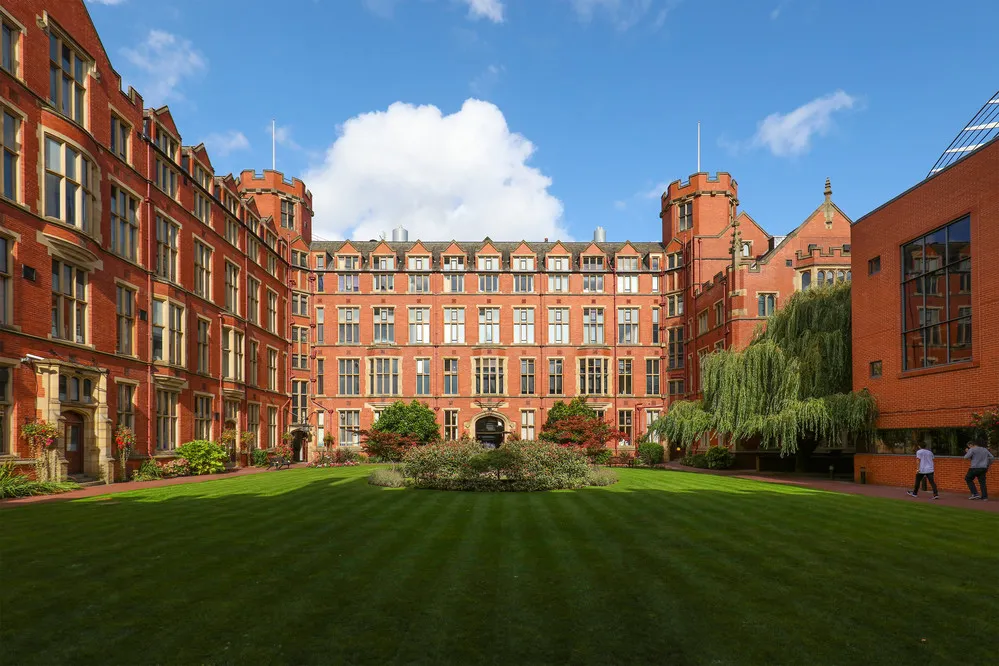 Photo: University of Sheffield, via wun.ac.uk
"Poetry demands a different quality of attention," she explains. "It slows your reading pace, it asks you to hold ambiguity, to sit with a feeling rather than resolve it. For people whose jobs are all about resolution — finding answers, closing cases, meeting targets — that's a genuinely novel cognitive experience. And novelty, in a positive form, is deeply restorative."
There's also the matter of time. A lunch break is finite. You cannot read a novel in forty-five minutes, but you can read six poems, write a draft of your own, and still get a sandwich. Poetry fits the gap in a way that feels satisfying rather than rushed.
Research from the Royal College of Psychiatrists has increasingly pointed toward creative arts participation as meaningful support for workplace mental health — not a replacement for clinical care, but a genuine buffer against the slow accumulation of stress that characterises modern professional life. Poetry clubs, it turns out, tick several boxes at once: social connection, creative expression, mindful attention, and — crucially — a reason to actually leave your desk.
What Gets Written in Meeting Room 3
The poems that emerge from these lunchtime gatherings are not, by and large, the polished, publishable kind. They are messier and more honest than that, which is rather the point.
At a poetry club inside a Birmingham-based housing association, members write in response to a weekly prompt chosen by whoever hosted the previous week. Recent prompts have included the smell of rain on concrete, something I've never told my manager, and the colour of a Monday morning. The resulting poems are read aloud, responded to warmly, and — unless their author wants otherwise — left in the room.
"We don't keep them," says Priya, who coordinates the group. "We write them, we share them, we let them go. It feels very freeing. Nothing has to be good. It just has to be honest."
This, therapists and wellbeing practitioners would recognise immediately, is the mechanism at work. The act of naming an experience in language — of reaching for the precise word, the true image — creates a small but significant distance between the person and the feeling. It is, in its quiet way, a form of processing.
Starting Your Own: What the Clubs Say Works
If you're reading this and thinking — actually, yes, I'd like that — the good news is that starting a workplace poetry club requires almost no infrastructure. The people running successful ones across Britain offer broadly similar advice: keep it small, keep it optional, keep it judgement-free, and always, always bring something to eat.
Start with reading before you ask anyone to write. Choose accessible poems — Mary Oliver, Hollie McNish, Simon Armitage, Imtiaz Dharker — before working toward anything more challenging. Make it clear from the first session that writing is an invitation, never an obligation. And resist the urge to make it formal. The moment it feels like a workshop, something essential evaporates.
Diane in Leeds puts it simply: "It's not about being a poet. It's about remembering, just for twenty minutes, that you're a person."
In offices and staff rooms and warehouse break areas across Britain, that reminder is proving to be worth rather a lot.