Whispered Dreams: How Britain's Adults Are Rediscovering the Magic of Bedtime Stories
In a world where screens dominate our evenings and stress follows us to bed, something wonderfully nostalgic is happening across Britain. From the cramped bedsits of university towns to the master bedrooms of suburban semis, adults are rediscovering the profound comfort of being told a story before sleep.
The Gentle Revolution in Our Bedrooms
What began as a niche corner of the podcast world has blossomed into a movement that's quietly transforming British bedtimes. Shows like "Nothing Much Happens" by Kathryn Nicolai and "Sleep With Me" have garnered devoted followings, but it's the distinctly British voices that are truly capturing hearts across the UK.
Take Miranda Pennycook, whose "Bedtime Stories for Grown-ups" podcast has become a Sunday evening ritual for thousands. Broadcasting from her cosy Cotswolds studio, she weaves tales of gentle adventures through English villages, complete with descriptions of morning mist over meadows and the distant sound of church bells. "I receive messages from lorry drivers parked in service stations, new mothers feeding babies at 3am, and city workers who can't switch off," she shares. "There's something universally healing about being guided into sleep by a kind voice."
Why Our Brains Crave Bedtime Narratives
Dr Sarah Matthews, a sleep therapist at the London Sleep Centre, explains the science behind this phenomenon: "When we listen to a gentle story, our minds naturally shift from the analytical, problem-solving mode that keeps us awake to a more receptive, dreamlike state. The human voice—especially one with a soothing cadence—triggers our parasympathetic nervous system, the body's natural relaxation response."
The key lies in the specific type of storytelling. Unlike the gripping narratives we might choose for daytime listening, bedtime stories deliberately avoid cliff-hangers, dramatic tension, or complex plots. Instead, they meander through peaceful scenarios: a walk through Richmond Park on an autumn morning, the gentle restoration of a forgotten garden, or the quiet satisfaction of baking bread on a rainy afternoon.
 Photo of Richmond Park, via Wikidata/Wikimedia Commons
British Voices Leading the Way
The UK has produced some particularly enchanting contributors to this growing field. James Wickham's "Sleepy Stories" transports listeners to imaginary British locations—a lighthouse keeper's routine on the Cornish coast, the seasonal rhythms of a Yorkshire dales farm, or the gentle bustle of a Victorian railway station.
Meanwhile, "The Sleepy Bookshelf," hosted by Louise Fletcher from her home studio in Edinburgh, offers serialised retellings of classic literature, stripped of their dramatic moments and reimagined as gentle, flowing narratives. Her version of "Pride and Prejudice" focuses not on romantic tension but on the soothing details of Regency daily life—the ritual of afternoon tea, the comfort of familiar drawing rooms, the peaceful rhythm of country walks.
More Than Entertainment: A Form of Self-Care
What's particularly striking about this trend is how it's being embraced as a legitimate wellness practice. Sleep clinics are beginning to recommend story podcasts alongside traditional relaxation techniques, and mental health practitioners are noting their therapeutic benefits.
"It's not just about falling asleep faster," explains Dr Matthews. "Regular bedtime story listeners often report improved sleep quality, reduced anxiety, and a greater sense of emotional regulation. There's something profoundly nurturing about the experience—it recreates the safety and comfort we associate with childhood bedtimes."
Creating Sacred Sleep Rituals
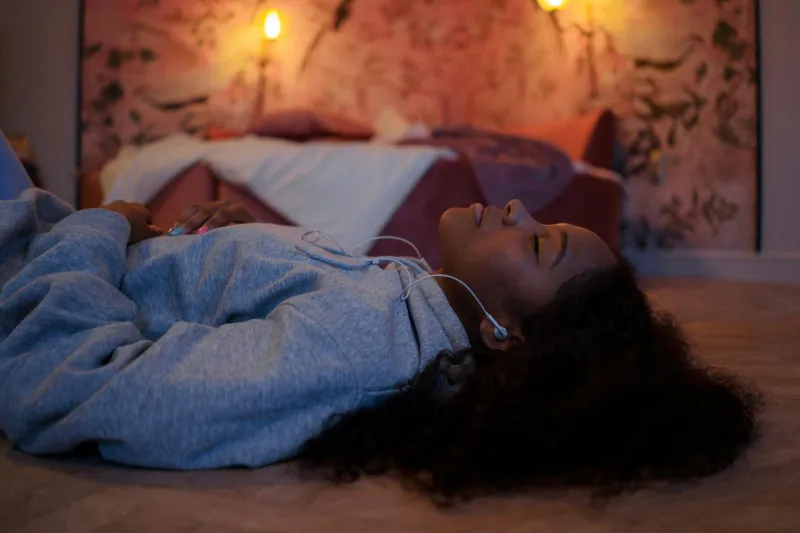
The most devoted listeners have developed elaborate evening routines around their chosen podcasts. Emma Richardson, a Manchester-based teacher, describes her ritual: "I make chamomile tea, dim all the lights except a small bedside lamp, and settle in with my favourite lavender pillow spray. When Miranda's voice begins, it's like a signal to my entire being that it's time to let go of the day."
This ritualistic aspect seems crucial to the practice's effectiveness. The predictable routine, combined with familiar voices and gentle narratives, creates what sleep experts call "sleep cues"—environmental and behavioural signals that prime the body for rest.
The Unexpected Community
Perhaps most surprisingly, this solitary bedtime practice has fostered unexpected communities. Social media groups dedicated to bedtime story podcasts buzz with recommendations, gentle discussions about favourite episodes, and touching testimonials from listeners whose sleep—and lives—have been transformed.
"I never expected to find my tribe through bedtime stories," laughs Sarah Chen, who moderates a Facebook group for UK bedtime story enthusiasts. "But there's something special about sharing this experience with others who understand the profound comfort of being told a story at the end of a difficult day."
Looking Forward: The Future of Gentle Storytelling
As this movement continues to grow, creators are experimenting with new formats. Some are incorporating elements of guided meditation, others are exploring seasonal themes that reflect the British countryside's changing moods. There's even talk of live bedtime story events—imagine drifting off to sleep in a candlelit theatre, surrounded by fellow seekers of gentle dreams.
In our increasingly connected yet isolated world, the simple act of listening to a bedtime story offers something profound: a return to the fundamental human need for narrative, comfort, and the healing power of a gentle voice in the darkness. As Britain embraces this quiet revolution, we're rediscovering that sometimes the most powerful wellness practices are also the simplest—and the most beautifully human.