The Magic Begins with a Single Page
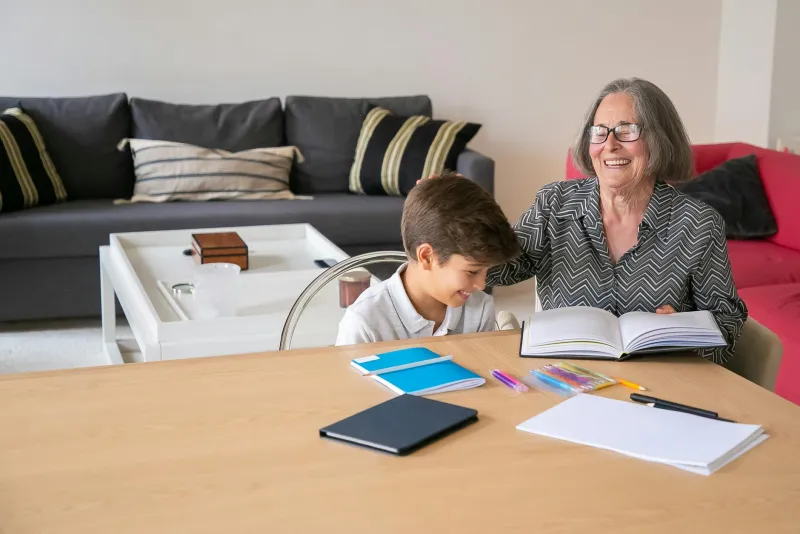
In a cosy corner of Meadowbrook Care Home in Dorset, eight-year-old Sophie carefully opens The Tiger Who Came to Tea whilst 92-year-old Margaret adjusts her reading glasses. What unfolds next isn't just a story about an unexpected feline visitor – it's the beginning of a friendship that spans nearly nine decades.
Across Britain, similar scenes are playing out in care homes from Cornwall to the Scottish Highlands. The intergenerational reading movement is quietly revolutionising how we think about community, connection, and the transformative power of shared stories.
From Stranger to Story Partner
The concept is beautifully simple: pair young readers with elderly residents for regular storytelling sessions. Yet the impact is anything but ordinary. At Willowdale Primary in Manchester, Year 3 pupils visit nearby Rosemount Care Home twice monthly, armed with picture books and boundless enthusiasm.
"The children arrive like little rays of sunshine," shares care coordinator Emma Thompson. "Our residents begin preparing days in advance, choosing their favourite cardigans and practising the stories they want to share from their own childhoods."
What started as a small pilot programme has blossomed into something extraordinary. The children, initially shy and uncertain, now bound through the doors with the confidence of seasoned storytellers. Meanwhile, residents who once spent quiet afternoons gazing out windows now eagerly anticipate their literary adventures.
The Ripple Effects of Shared Stories
Dr Sarah Williams, a gerontologist at King's College London, has been studying these programmes across fifteen British care homes. Her findings reveal remarkable benefits that extend far beyond the reading sessions themselves.
"We're seeing significant improvements in cognitive engagement among elderly participants," she explains. "The anticipation, the social interaction, and the mental stimulation of following storylines all contribute to enhanced wellbeing."
For the children involved, the benefits are equally profound. Teachers report improved reading confidence, enhanced empathy skills, and a deeper understanding of British social history as residents share tales from their youth.
Ten-year-old James from Oakwood Primary in Leeds perfectly captures this transformation: "Mrs Patterson tells me stories about when she was little during the war. She didn't have many books then, so now we read together and she says I'm giving her all the stories she missed."
Building Literary Communities
The most successful programmes go beyond simple reading sessions. At Sunshine Gardens Care Home in Brighton, the initiative has evolved into a thriving literary community. Children and residents collaborate on creative writing projects, with youngsters typing up handwritten memoirs and elderly participants illustrating children's stories with watercolours.
"It's become a proper writing circle," laughs head teacher Mrs Collins. "The children are learning about narrative structure from people who've lived the most incredible stories themselves."
The home's communal areas now display joint artwork and collaborative poems, creating a gallery of intergenerational creativity that visitors marvel at. Family members report that their elderly relatives seem more animated and engaged, whilst parents notice their children showing increased patience and respect for older adults.
The Science of Connection
Neuroscientist Professor David Martinez from Oxford University has been researching the neurological benefits of these reading partnerships. His preliminary studies suggest that shared storytelling activates mirror neurons in ways that solitary reading cannot.
"When we read together, particularly across generations, we're not just processing words," he explains. "We're sharing emotional experiences, cultural knowledge, and creating new neural pathways associated with empathy and social bonding."
The physical benefits are noteworthy too. Care staff report that residents participating in reading programmes show improved posture, better sleep patterns, and increased appetite on programme days.
Stories That Heal
Perhaps most touching are the individual transformations these programmes facilitate. At Riverside Care Home in Glasgow, 87-year-old Robert, who had become increasingly withdrawn following his wife's death, found new purpose as a storytelling mentor to six-year-old Isla.
"Robert barely spoke for months after losing Mary," recalls care manager Janet Stewart. "But when Isla started visiting with her fairy tale books, something shifted. Now he's writing down all the stories Mary used to tell their grandchildren, creating a legacy for Isla to take home."
The programme has become so integral to the home's community that residents now request specific books and eagerly discuss storylines during mealtimes. What began as a weekly activity has transformed into a continuous celebration of narrative and connection.
Expanding the Circle
As word spreads about these remarkable programmes, more communities are embracing the concept. The charity Generations United has helped establish over 200 reading partnerships across Britain in the past two years, with waiting lists growing in both schools and care homes.
"The demand is extraordinary," notes programme director Helen Davies. "We're seeing requests from rural villages to inner-city boroughs. Everyone wants to be part of this storytelling revolution."
Some programmes have expanded to include teenage volunteers, creating three-generation reading circles that span nearly eight decades of life experience. Others incorporate digital storytelling, with tech-savvy youngsters helping residents create audio recordings of their favourite tales.
The Future of Shared Stories
As these programmes continue flourishing across Britain, they're proving that the most powerful stories aren't always found in bestselling novels or blockbuster films. Sometimes, the most transformative tales unfold in quiet care home lounges, where small hands help turn pages whilst wise voices share memories.
In an age of digital distraction and social isolation, these intergenerational reading programmes remind us that human connection remains our most precious resource. They're creating communities where age becomes irrelevant, where stories serve as bridges, and where the simple act of reading together transforms ordinary moments into extraordinary memories.
The children involved in these programmes aren't just learning to read better – they're learning to live better, discovering that kindness, patience, and shared imagination can create bonds that enrich every chapter of life.