The Courage to Choose Light
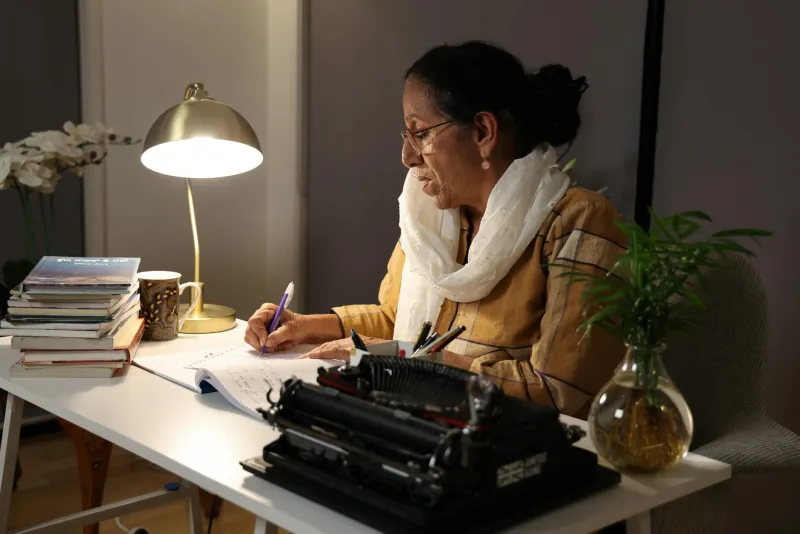
In her sunny Norwich study, overlooking a garden where roses climb enthusiastically up weathered brick walls, bestselling author Miranda Hartley is explaining why she deliberately writes what she calls "hope-filled fiction." It's a choice that has earned her both devoted readers and occasional literary scepticism, but one she makes with unwavering conviction.
"I'm not interested in pretending the world is perfect," she clarifies, gesturing toward the stack of manuscripts on her desk—her latest novel about a community garden that transforms a struggling neighbourhood. "My characters face real challenges, real heartbreak, real difficulties. The difference is that I choose to show them finding ways through, finding light, finding each other. That's not naive—that's necessary."
Miranda is part of a quietly revolutionary movement in British literature: authors who have consciously decided to write toward hope rather than despair, connection rather than isolation, healing rather than harm. They're proving that uplifting fiction isn't lightweight—it's essential.
The Philosophy of Purposeful Joy
This isn't about writing fairy tales or avoiding difficult subjects. Instead, these authors are exploring what happens when we approach human struggles with the assumption that redemption is possible, that communities can heal, that individuals can grow beyond their circumstances.
James Pemberton, whose novels about small-town life in the Cotswolds have garnered both critical acclaim and passionate readership, explains his approach: "I write about divorce, about job loss, about grief, about all the things that challenge us. But I'm fascinated by how people rebuild, how they find unexpected strength, how communities rally around each other. Those stories deserve to be told with the same literary sophistication as stories about destruction."
His latest novel, "The Wednesday Volunteers," follows a group of strangers who meet while helping at a local food bank and gradually become each other's chosen family. It's been described by reviewers as "achingly real yet fundamentally hopeful"—exactly the balance these writers strive to achieve.
Redefining Literary Courage
For decades, literary fiction has often equated darkness with depth, cynicism with sophistication. These British authors are challenging that assumption, arguing that it takes equal courage to write toward light.
"There's this idea that happy endings are somehow less intellectually rigorous than tragic ones," observes Sarah Chen, whose novels about multicultural Britain focus on characters building bridges across cultural divides. "But have you tried writing a convincing, earned happy ending? Have you tried showing characters genuinely changing for the better in ways that feel psychologically authentic? It's incredibly challenging work."
Sarah's breakthrough novel, "The Friendship Equation," explores how a retired mathematics professor and a young single mother become unlikely allies in saving their local library. The book deals seriously with gentrification, cultural barriers, and economic hardship—but ultimately celebrates the human capacity for connection across difference.
The Ripple Effect of Positive Storytelling
The impact of these authors extends far beyond book sales. Their readers often describe discovering these novels as life-changing experiences, finding in them both mirrors for their own struggles and maps for moving forward.
Dr. Rachel Morrison, a literature professor at the University of Bath who studies the psychological impact of fiction, has been tracking this phenomenon. "We're seeing readers who report genuine changes in their outlook after engaging with hopeful fiction," she explains. "It's not that these books provide simple answers, but they model ways of thinking about problems that emphasise agency, community, and possibility."
The authors themselves receive remarkable correspondence from readers. Miranda Hartley keeps a special folder of letters from people who credit her novels with helping them through difficult periods—not through escapism, but through examples of resilience and community support that readers then sought out in their own lives.
Masters of the Craft
These aren't amateur writers crafting simple feel-good stories. They're accomplished literary artists who have mastered the delicate balance between honesty and hope.
Take David Ashworth, whose "Coastal Connections" series follows the residents of a fictional Cornish village through various challenges and changes. His prose is lyrical, his character development nuanced, his exploration of contemporary issues sophisticated. The difference is in his fundamental belief that people are capable of growth, that communities can be sources of strength, that even difficult circumstances can lead to unexpected blessings.
"I'm not writing propaganda for optimism," David clarifies during our conversation from his home near St. Ives. "I'm writing realistic fiction that happens to believe in human potential. My characters earn their happiness through struggle, through making better choices, through learning to see each other more clearly. That's not sentimental—that's hopeful realism."
The Community of Hope-Builders
What's particularly beautiful about this movement is how supportive these authors are of each other. They regularly recommend each other's work, appear at events together, and have created an informal network of writers committed to what they call "constructive storytelling."
Eleanor Blackwood, whose novels about women finding their voices later in life have gained a devoted following, describes this community: "We're not competing with each other—we're collaborating in a larger project of showing that literature can be a force for healing and connection. There's room for all kinds of stories in the world, and we're claiming space for the ones that help people believe in better possibilities."
This collaborative spirit extends to their relationship with readers. Many of these authors are active on social media, not just promoting their books but engaging in conversations about how fiction can contribute to personal and social wellbeing.
The Global Reach of British Optimism
Interestingly, these distinctly British voices are finding international audiences hungry for hopeful storytelling. Their books are being translated into multiple languages, and they're receiving invitations to speak at literary festivals worldwide.
"I think there's a global appetite for stories that acknowledge difficulty without wallowing in it," suggests Miranda Hartley. "People everywhere are dealing with challenges—climate change, political division, economic uncertainty. They don't need fiction to remind them the world has problems. They need fiction to show them that humans are capable of addressing those problems together."
The Future of Hope-Filled Fiction
As these authors continue to gain recognition, they're inspiring a new generation of writers to consider the power of purposeful optimism in their own work. Creative writing programmes are beginning to explore "constructive storytelling" as a legitimate literary approach.
The movement is also attracting attention from researchers interested in the role of narrative in social change. If stories shape how we understand the world and our place in it, then stories that model resilience, community, and positive change could have profound implications for how we approach collective challenges.
Why Hope Matters Now
In our current moment—with its very real anxieties and uncertainties—these authors argue that hopeful fiction isn't escapist luxury but essential nourishment. Their books don't deny difficult realities; they imagine ways through them.
"Every story we tell is a choice about what kind of world we want to live in," reflects James Pemberton. "I choose to write stories that suggest we can do better, be better, love better. Not because it's easy, but because it's necessary. Someone has to hold space for the possibility that things can improve, that people can change, that communities can heal. Literature has always been part of how we envision better futures. These stories are my contribution to that ancient, essential work."
As readers continue to embrace these hope-filled narratives, they're proving that optimistic fiction isn't just commercially viable—it's culturally vital. In choosing hope, these British authors aren't avoiding reality; they're expanding it to include all the possibilities that emerge when we believe in our collective capacity for growth, healing, and positive change.