The Note That Changed Everything
When Emma discovered the slim volume of poetry tucked behind the bestsellers at her local bookshop in York, she almost missed the folded paper that fluttered to the floor. The handwritten note was brief but profound: "For whoever needs these words today—you are braver than you believe. From a fellow traveller on this journey."
Emma had been having the worst month of her life. Redundancy, a relationship ending, and her father's recent diagnosis had left her feeling utterly lost. Yet here, in Fossgate Books, was a gift from a complete stranger who somehow understood exactly what she needed to hear.
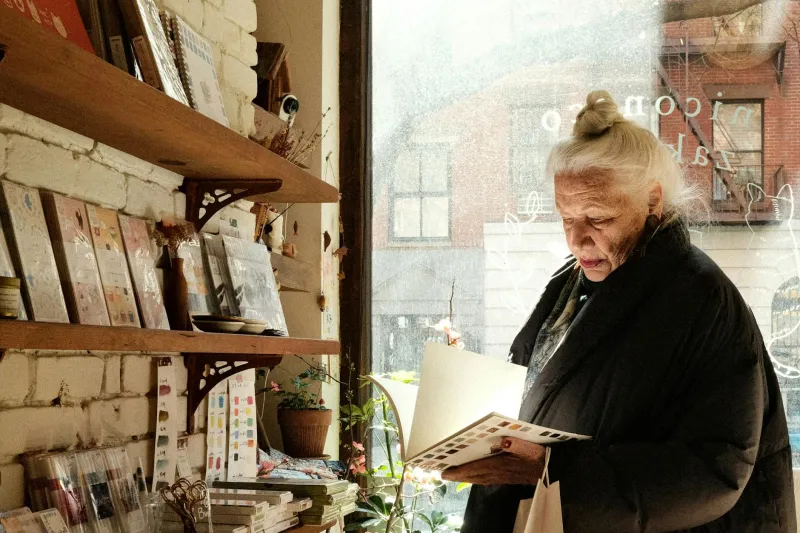
 Photo: Fossgate Books, via i.pinimg.com
"I stood there crying in the poetry section," Emma recalls with a laugh. "Poor Helen behind the till didn't know what to do with me. But that book—and that note—genuinely changed my perspective. I still have it on my bedside table."
A Movement Born from Kindness
What Emma had stumbled upon was part of a quiet revolution happening in independent bookshops across Britain. From Edinburgh to Exeter, Hay-on-Wye to Hebden Bridge, a growing network of book lovers is participating in what's become known as the "kindness shelf" movement—purchasing books anonymously for strangers who might need them, complete with encouraging notes tucked inside.
"It started quite by accident," explains Helen Morrison, owner of Fossgate Books, where Emma found her life-changing poetry collection. "A customer bought an extra copy of a self-help book and asked if I could give it to someone who looked like they might need it. She left the sweetest note inside about overcoming difficult times."
That single act of generosity has blossomed into something beautiful. Helen now maintains a discrete "pay-it-forward" section where anonymous donors leave carefully chosen books with handwritten messages of hope, encouragement, and solidarity.
The Psychology of Literary Kindness
"There's something particularly powerful about receiving a book from a stranger," observes Dr. Rachel Stevens, who studies community psychology at the University of Bristol. "Books are deeply personal choices. When someone selects a title specifically to help another person, it's an incredibly intimate act of care."
The movement seems to tap into something uniquely British—our talent for expressing deep emotion through understated gestures. The notes left in these books are rarely dramatic or overly sentimental. Instead, they carry the gentle warmth that characterises British kindness at its finest.
Messages That Matter
The handwritten notes accompanying these gifted books reveal the beautiful diversity of human experience and compassion. Some are practical: "This cookbook saved my sanity during lockdown—hope it brings you joy too." Others are profoundly moving: "For the mum sitting in the café looking exhausted—you're doing better than you think."
Many note-writers share their own experiences with remarkable honesty. "I bought this after my divorce and it helped me remember who I was," reads one message tucked into a memoir about starting over. "Hoping it finds someone else ready for a new chapter."
Spreading Across the Shires
The movement has grown organically, spreading from bookshop to bookshop through word of mouth and social media. Independent booksellers, already champions of community and connection, have embraced the initiative with characteristic enthusiasm.
Some of Britain's participating kindness shelf bookshops:
- Topping & Company, Edinburgh: Features a "Books for Courage" section where customers can leave titles with notes of encouragement
- The Book Corner, Saltburn-by-the-Sea: Maintains a "Random Acts of Reading" shelf with books donated for fellow sea-lovers
- Storytellers Inc., St. Albans: Offers a "Pay-it-Forward" programme where customers can sponsor books for local families
- The Bookshop Band, Wigtown: Scotland's book town features multiple shops participating in the "Galloway Kindness" initiative
- Forum Books, Corbridge: Runs a monthly "Books of Hope" campaign where the community rallies around different themes
- Belmont Books, Belmont: Features a "Community Reads" corner where locals share books that changed their lives
The Booksellers' Perspective
"It's restored my faith in people," admits James Wright, who runs a small independent bookshop in the Pennines. "During the pandemic, when everything felt quite dark, this initiative reminded us all that there's so much goodness in the world. People want to help each other—they just need the right opportunity."
Booksellers have become the quiet guardians of this movement, carefully matching donated books with customers who might benefit from them. "You develop a sixth sense," explains Margaret Foster from a bookshop in the Cotswolds. "Someone browsing the self-help section with a particular expression, or a parent looking overwhelmed in the parenting section. That's when I might quietly mention that someone has left something special."
Beyond the Transaction
What makes this movement particularly special is how it transforms the simple act of buying a book into something more meaningful. Participants report that choosing books for strangers has made them more thoughtful about their own reading choices and more aware of the power of literature to heal and inspire.
"I find myself reading differently now," reflects Sarah, a regular contributor to her local bookshop's kindness shelf in Devon. "I'm always thinking about whether a book might help someone else. It's made me more conscious of how stories can be medicine."
The Ripple Effect
Many recipients of kindness shelf books become donors themselves, creating a beautiful cycle of literary generosity. Emma, who found that life-changing poetry collection in York, now regularly contributes books to Helen's pay-it-forward section.
"I can't repay the person who left me that book," Emma explains. "But I can pass the feeling forward. Every month, I buy something I think might help someone else. It's become one of my favourite rituals."
A Very British Revolution
Perhaps what makes this movement feel so perfectly suited to British character is its combination of genuine kindness with respectful discretion. There's no fanfare, no expectation of gratitude or recognition. Just the quiet satisfaction of knowing that somewhere, someone might find exactly what they need between the pages of a carefully chosen book.
"It's very British, isn't it?" muses Helen from Fossgate Books, watching a customer discover a donated book with obvious delight. "We're not comfortable with grand gestures, but we're brilliant at small acts of kindness. This captures something essential about who we are as a nation of book lovers."
In an age of digital everything and increasing isolation, these kindness shelves represent something beautifully analogue and deeply human. They remind us that sometimes the most profound connections happen between strangers, mediated by nothing more than a good book and a few thoughtful words written by hand.
The movement continues to grow, one bookshop, one donated volume, one handwritten note at a time. In the margins of Britain's literary landscape, ordinary people are writing extraordinary stories of hope, connection, and the simple belief that everyone deserves to find exactly the right book at exactly the right moment.