The Call of Distant Pages
There's something magical about watching Sarah McKenzie load her weathered Land Rover with boxes of books before dawn breaks over the Scottish Highlands. For the past six years, this retired teacher has been making the monthly journey from Inverness to the remote fishing village of Mallaig, then catching the ferry to bring literature to the scattered communities of the Inner Hebrides.
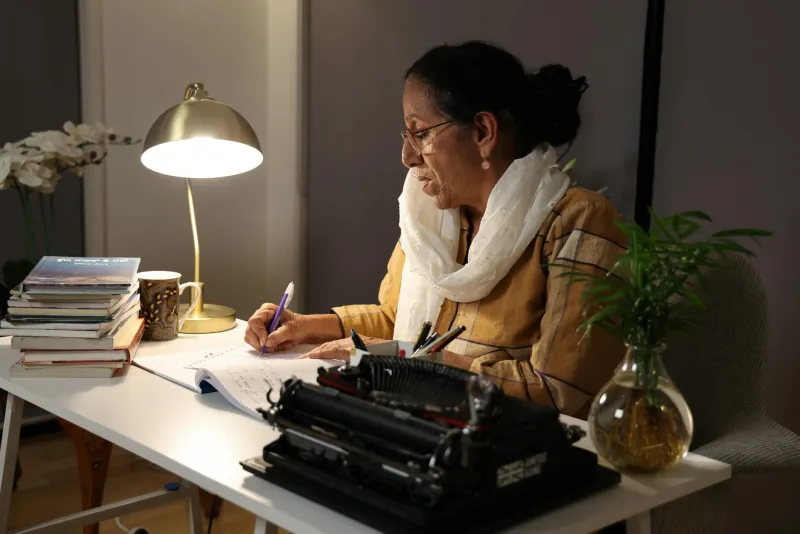
 Photo of Sarah McKenzie, via Wikidata/Wikimedia Commons
"People think it's mad, driving four hours each way just to deliver books," Sarah laughs, securing a particularly heavy box of historical fiction. "But you should see Mrs MacLeod's face when she gets the latest Louise Penny mystery. That's worth every mile."
Sarah is part of an extraordinary network of volunteers across Britain who refuse to let geography stand between isolated communities and the joy of reading. These "Lighthouse Readers" – as they've come to be known – are bridging the gap left by library closures and limited transport links, ensuring that even the most remote coastal hamlets can access the transformative power of literature.
Weathering Every Storm
The challenges these volunteers face would deter most people. Tom Hartwell, who covers the Cornwall coast from his base in Penzance, has learned to read weather patterns like a sailor. "You can't just turn up when it's convenient," he explains, checking the forecast on his phone. "Storm Ciara taught me that. I ended up stuck in Mousehole for three days, but we had the most wonderful impromptu book club sessions by the harbour wall."
Tom's route takes him to clifftop villages where the nearest library is a two-hour bus journey away – if the buses are running. He's developed an intricate understanding of each community's reading preferences, from the retired sea captains who devour maritime histories to the young mothers seeking escapist romance novels.
"There's Mrs Penberthy in Porthcurno who only reads books about gardens, and old Jack who insists on westerns but secretly loves the poetry collections I slip into his pile," Tom grins. "After five years, you become a bit of a literary matchmaker."
Islands of Stories
Perhaps nowhere is this service more vital than on Britain's inhabited islands. Jenny Morrison has been serving the Orkney archipelago for eight years, using everything from ferries to fishing boats to reach her readers. Her territory spans sixteen inhabited islands, each with its own character and reading culture.
"Sanday loves crime novels – can't get enough of them. But over on Westray, they're all about historical sagas," Jenny explains, sorting books in her garage-turned-library depot. "The children on Papa Westray – all twelve of them – have worked their way through every David Walliams book I can find."
The logistics are mind-boggling. Ferry timetables, weather delays, and the simple challenge of carrying enough books for communities that might not see another delivery for two months. Yet Jenny wouldn't trade this work for anything.
"Last winter, when the ferries were cancelled for a week, I watched the whole of Stronsay work together to share the books I'd managed to get there the week before. Neighbours passing novels over garden fences, children swapping picture books at the playground. That's when you realise you're not just delivering books – you're nurturing something much more precious."
The Ripple Effect
The impact extends far beyond individual reading pleasure. In Clovelly, Devon, volunteer reader Marcus Webb has watched his monthly book runs transform the social fabric of the village. "It started with me just dropping off books at the post office," he recalls. "Now we have a monthly book circle that's become the heart of the community."
The group meets in the village hall, overlooking the harbour where fishing boats bob against their moorings. Members range from teenagers to octogenarians, united by their love of stories and the shared experience of living in one of Britain's most photographed but isolated villages.
"We had a 16-year-old and an 82-year-old have the most passionate discussion about The Seven Husbands of Evelyn Hugo last month," Marcus laughs. "That's the beauty of books – they create connections across every divide."
Digital Bridges and Human Touch
While technology offers alternatives, these volunteers have discovered something irreplaceable about the physical act of sharing books. "E-readers are wonderful, but they can't recreate the moment when you hand someone exactly the right book at exactly the right time," reflects Sarah McKenzie.
Many of the communities they serve have unreliable internet connections, making digital libraries impractical. But more importantly, the volunteers provide something algorithms cannot: human curation, personal recommendations, and the simple pleasure of discovering an unexpected treasure.
Looking to the Horizon
As coastal communities face ongoing challenges from economic changes and climate concerns, these literary lifelines become ever more important. The volunteers speak of expansion plans – new routes, additional volunteers, and partnerships with local businesses and tourism boards.
"We're not just preserving access to books," Tom Hartwell reflects, watching the sun set over Mount's Bay. "We're preserving the idea that every community, no matter how small or remote, deserves to be connected to the wider world through stories."
In an age of digital connectivity, these Lighthouse Readers remind us that sometimes the most profound connections still happen one book, one conversation, one journey at a time. They're proof that the best stories aren't just found between the pages – they're written by ordinary people doing extraordinary things, one coastal community at a time.