When Strangers Become Storytellers
In a converted red telephone box in the heart of Little Waltham, Essex, something extraordinary is happening. Where once urgent calls connected distant voices, now handwritten stories bridge the gaps between neighbours who've lived side by side for years without truly knowing each other.
Margaret Thornton, 67, discovered this when she nervously slipped her first story into the village's new 'Story Box' last spring. "I'd written about my grandmother's wartime garden," she explains, adjusting her reading glasses. "Three days later, there was a beautiful response from someone who'd recognised the street I'd described. Turns out, they'd grown up just two doors down from where my nan lived."
The Quiet Revolution of Handwritten Connection
This isn't an isolated incident. Across Britain, from the Scottish Highlands to the Cornish coast, communities are embracing what locals are calling 'story swapping' – the exchange of original, handwritten tales, poems, and memories through dedicated community spaces.
Unlike traditional book exchanges, these initiatives celebrate original creativity. Residents contribute their own words, their own experiences, their own imagination. The result? A tapestry of local voices that reflects the unique character of each community.
In Hebden Bridge, West Yorkshire, retired teacher Sarah Mitchell has transformed an old noticeboard outside the community centre into what she calls a 'Memory Wall'. "People pin up everything from childhood recollections to fictional tales inspired by our local landscape," she says. "Last month, someone shared a story about the ghost of a Victorian mill worker. By the end of the week, five different people had added their own chapters to the tale."
More Than Words on Paper
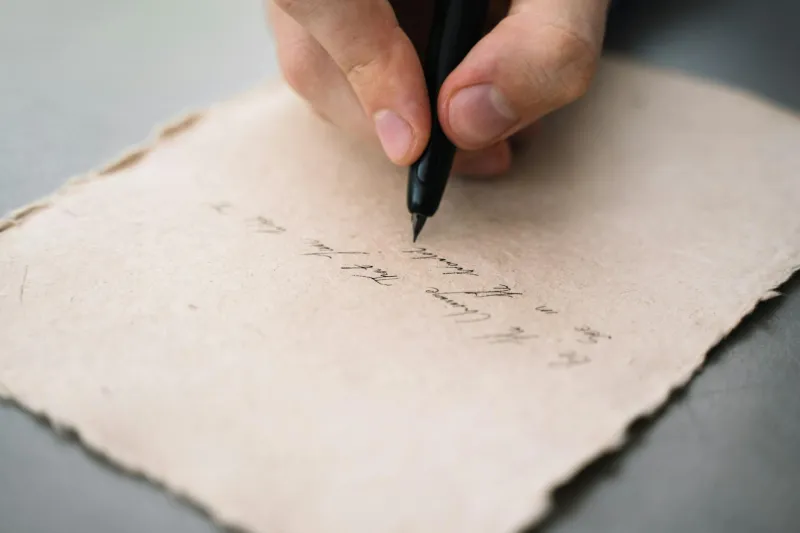
What makes these exchanges special isn't just the stories themselves – it's the tangible, human element of handwritten communication. In an age of instant messages and digital screens, there's something profoundly moving about receiving a story crafted by hand.
"You can tell so much from someone's handwriting," observes James Fletcher, who coordinates a story-swapping initiative in his Gloucestershire village. "The careful loops of an elderly person taking their time, the excited scrawl of a teenager bursting with ideas, the neat print of someone who wants to ensure every word is clear. Each story carries the personality of its writer."
The movement has found particular resonance during challenging times. When lockdowns isolated communities, these analogue connections provided comfort that video calls couldn't match. "Holding a piece of paper that someone else had touched, reading words they'd carefully chosen and written by hand – it felt like receiving a warm hug," reflects participant Emma Davies from her home in Cardiff.
Unexpected Friendships Bloom
The most heartwarming aspect of these story exchanges lies in the connections they foster. In Whitstable, Kent, eight-year-old Oliver's tale about a magical seashell sparked a correspondence with 78-year-old retired fisherman Bill. Their ongoing story collaboration – shared through the town's 'Seaside Stories' box – has blossomed into an unlikely friendship that spans generations.
"Bill knows everything about the sea," Oliver explains enthusiastically. "He helps me make my stories more real, and I help him remember what it's like to believe in magic."
Similar connections are emerging nationwide. In Manchester's Northern Quarter, a story about homesickness led to a support network for newcomers to the city. A humorous piece about gardening disasters in Bath resulted in a community allotment project. These handwritten words are planting seeds of genuine human connection.
The Art of Slow Storytelling
Perhaps most significantly, these initiatives are encouraging what participants call 'slow storytelling' – the deliberate, thoughtful craft of putting pen to paper without the pressure of immediate response or digital perfection.
"There's no delete button with handwriting," notes Dr. Helen Crawford, a literature lecturer who's been studying the phenomenon. "Writers must consider their words more carefully. They can't endlessly edit or second-guess themselves. The result is often more authentic, more vulnerable, more human."
Building Tomorrow's Community Stories
As these story-swapping networks continue to grow, they're creating something unprecedented: living archives of community life, written by the people who live it. Future generations will inherit not just published literature, but the authentic voices of ordinary people who chose to share their extraordinary imaginations.
From converted phone boxes to village halls, from seaside towns to mountain communities, Britain's handwritten story revolution is proving that sometimes the most powerful technology is the simplest: a pen, paper, and the courage to share your heart with strangers who might just become friends.
In our increasingly connected yet often lonely world, these communities are rediscovering a fundamental truth – that stories shared by hand carry something digital words cannot: the irreplaceable warmth of human touch.