The Revolution Hiding in Plain Sight
Across Britain, something remarkable is happening in the most ordinary of places. While commuters scroll through their phones and colleagues chat over tea, a growing community of unlikely authors is quietly crafting the next chapter of British literature—fifteen minutes at a time.
Meet Sarah Thompson, a ward sister at Manchester Royal Infirmary, who's been scribbling poetry on the backs of patient notes during her night shifts. "I started writing little verses about the sunrise I'd see through the ward windows after particularly tough nights," she explains, her eyes lighting up despite the exhaustion that comes with a twelve-hour shift. "Those few minutes of writing became my sanctuary."
 Photo of Sarah Thompson, via Wikidata/Wikimedia Commons
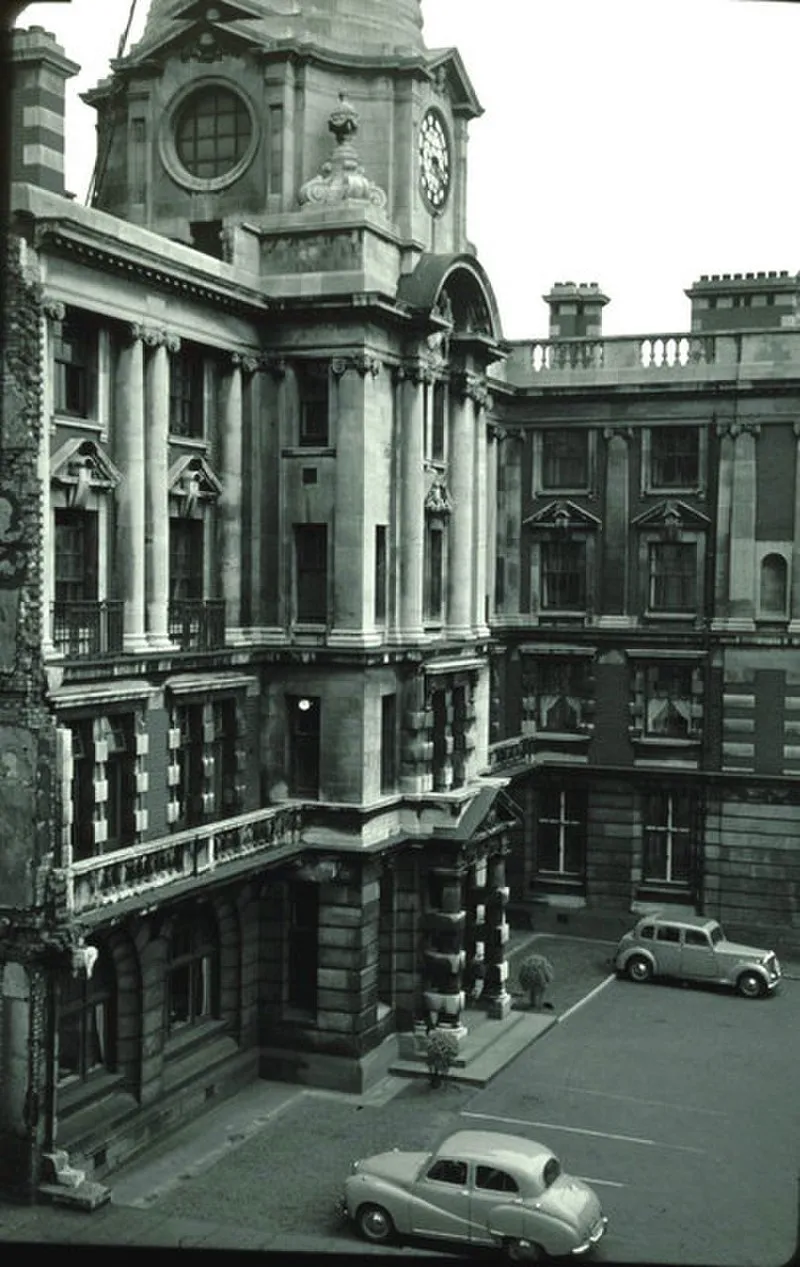 Photo of Manchester Royal Infirmary, via Wikidata/Wikimedia Commons
Sarah isn't alone. From the bus depot in Cardiff where driver Michael Evans crafts short stories between routes, to the primary school in Brighton where teaching assistant Emma Clarke writes historical fiction during lunch breaks, Britain's micro-novelists are proving that creativity doesn't require a cottage in the Cotswolds or a trust fund.
Finding Magic in the Mundane
The beauty of this movement lies not in its grand gestures, but in its gentle persistence. These writers aren't waiting for the perfect moment—they're creating it, one stolen minute at a time.
Take James Morrison, a retail assistant in Edinburgh's Princes Street. Between helping customers and restocking shelves, he's been writing a fantasy novel on his phone's notes app. "I used to think I needed hours of uninterrupted time to write properly," he shares. "But I've discovered that five minutes here, ten minutes there—it all adds up. Some of my best dialogue has come to me while folding jumpers."
This approach to writing reflects something deeply British: the art of making do, of finding extraordinary moments within the ordinary rhythm of daily life. It's the same spirit that created kitchen sink dramas and gave us poets who found beauty in industrial landscapes.
The Science of Small Moments
There's something almost magical about how these brief writing sessions work. Research suggests that our brains often do their best creative work when we're not trying too hard—when we're in that liminal space between focused attention and gentle distraction.
"I write while my kettle boils," says Angela Patel, a teaching assistant from Leicester who's completing her first novel. "Those three minutes have become sacred to me. I've written entire scenes while waiting for my Earl Grey to brew."
The constraints themselves become liberating. When you know you only have a quarter of an hour, there's no time for perfectionism or procrastination. The words must flow, imperfect and immediate, capturing thoughts and emotions in their rawest form.
Building Community in Isolation
What's particularly heartwarming about this movement is how these scattered writers have found each other. Social media groups like "15-Minute Fiction" and "Micro Writers UK" have become virtual writing rooms where bus drivers share poems with nurses, and shop assistants swap story ideas with teachers.
"We're all juggling the same things—work, family, life," explains community organiser Lisa Chen, a part-time librarian from Newcastle who started one of the largest online groups. "But we've proven that you don't need to choose between having a 'real job' and being a writer. You can be both."
These communities offer something precious: understanding. When traditional writing groups might expect you to attend weekly meetings or produce thousands of words, these micro-writers celebrate the paragraph written during a tea break or the haiku composed on the morning commute.
The Ripple Effects of Tiny Triumphs
The impact of this movement extends far beyond the pages being written. Many participants speak of how these brief creative moments have transformed their relationship with their day jobs and their sense of self.
"I'm still a cleaner," says David Wright from Birmingham, who's been writing a memoir about his experiences in the hospitality industry. "But now I'm also a writer. Those fifteen minutes in the staff room have given me back a part of myself I thought I'd lost."
This sentiment echoes across the community. The act of writing, however briefly, becomes an act of self-care, a way of saying that your thoughts and stories matter, even in the midst of serving others.
Starting Your Own Literary Journey
For those inspired to join this quiet revolution, the barrier to entry couldn't be lower. All you need is something to write with—whether that's a phone, a notebook, or the back of an envelope—and the willingness to see potential in the smallest pockets of time.
The movement's unofficial motto might be: "Don't wait for time, make time." Whether it's the five minutes before your shift starts, the brief pause while your computer loads, or those precious moments when the children are finally asleep, stories are waiting to be born.
A New Chapter for British Writing
As Britain's micro-novelists continue to prove, extraordinary stories don't require extraordinary circumstances. They require only the belief that every voice matters and every moment holds potential. In coffee shops and hospital corridors, in school playgrounds and factory break rooms, the next chapter of British literature is being written—one beautiful, stolen moment at a time.
Perhaps that's the most inspiring lesson of all: that creativity, like hope, finds a way to flourish wherever it's planted, however briefly it's tended.