The Gift of Wakeful Hours
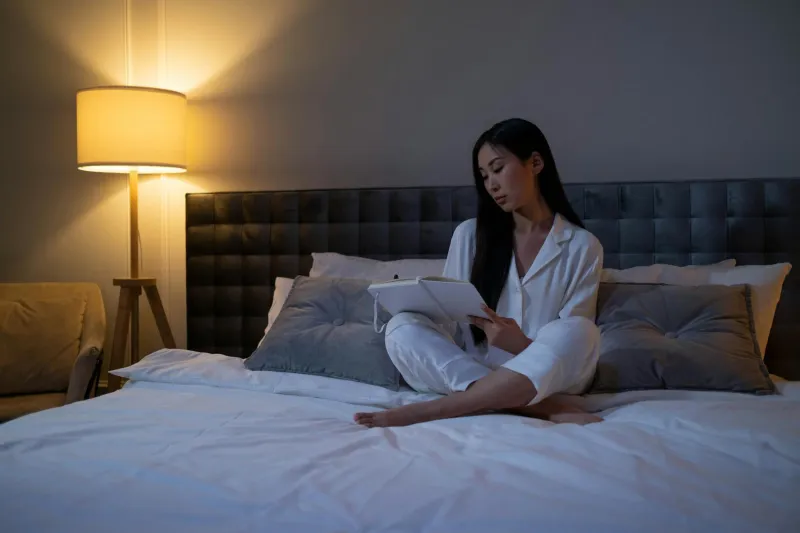
It's 2:47 AM in a terraced house in Sheffield, and whilst most of the street sleeps soundly, Sarah Chen sits at her kitchen table with a steaming mug of chamomile tea and an open notebook. The soft glow of a table lamp illuminates pages filled with her flowing handwriting—stories of dragons in Yorkshire dales and love letters from fictional characters who feel more real than her daytime worries.
"I used to lie in bed getting frustrated about not sleeping," Sarah explains, adjusting her woolly cardigan against the night chill. "Now I look forward to these hours. They're mine in a way that daylight never quite is."
Sarah is part of a growing community of British night writers who've transformed their relationship with sleeplessness. Rather than viewing insomnia as something to battle, they've embraced these quiet hours as an unexpected doorway to creativity and peace.
The Science of Midnight Muses
Dr. Rachel Whitmore, a sleep researcher at King's College London, suggests there might be something uniquely conducive to creativity in our night-time brain state. "When we're naturally tired but alert, our usual mental filters relax," she explains. "Ideas that might seem silly or impossible during the day can flow more freely. It's like accessing a different part of ourselves."
This rings true for Marcus Thompson, a postal worker from Cardiff who discovered his writing voice during a particularly challenging period of shift work. "My sleep schedule was all over the place anyway," he recalls. "Instead of fighting it, I started writing letters to my younger self. Before I knew it, I was crafting short stories about growing up in the Welsh valleys."
Marcus now leads an informal online group called "Britain's Night Scribblers," where members from the Highlands to the Home Counties share their nocturnal writing experiences and encourage each other's creative journeys.
Creating Sacred Space in the Dark
What strikes many night writers is how different the world feels in those small hours. Emma Foster, a teacher from Brighton, describes it as "stepping into a parallel universe where time moves differently."
"During the day, I'm rushing between lessons, marking papers, answering emails," Emma says. "But at 3 AM, there's nowhere else I need to be. No one's expecting anything from me. It's pure creative freedom."
Emma's midnight ritual involves lighting a single candle, brewing proper Yorkshire tea, and settling into her favourite armchair with a fountain pen—a birthday gift to herself that makes the act of writing feel more ceremonial. Her nocturnal stories often explore themes of teaching, childhood wonder, and the small miracles hidden in everyday school life.
The Community of Quiet Hours
Whilst night writing might seem solitary, many practitioners find unexpected connection through their shared experience. Online forums buzz with activity during the small hours as writers across different time zones—from British insomniacs to early-rising creatives in other countries—share encouragement and inspiration.
"There's something magical about knowing that whilst I'm writing in my little cottage in the Cotswolds, someone in Glasgow might be doing the same thing," reflects Janet Morrison, a retired librarian whose night-time writing practice began after her husband's death. "We're all alone together, if that makes sense."
Janet's late-night stories often feature elderly protagonists discovering new adventures, and she's found that writing through her grief has transformed her relationship with both loss and solitude. "The darkness doesn't feel empty anymore," she explains. "It feels full of possibilities."
From Restless to Restful
Perhaps most remarkably, many night writers report that their creative practice has actually improved their overall sleep patterns. Dr. Whitmore explains this apparent paradox: "When we engage in meaningful, non-stimulating activity during wakeful periods, we often find ourselves naturally becoming sleepy rather than anxiously trying to force sleep."
Tom Bradley, a software developer from Manchester, experienced this firsthand. "I'd spend hours scrolling my phone, getting more and more wound up," he remembers. "Now I write for an hour or two, and I often find myself naturally ready for sleep. Even if I don't sleep immediately, I feel peaceful rather than frustrated."
The Ripple Effect
The benefits of night writing often extend far beyond the dark hours. Many practitioners report increased confidence in their daytime creative pursuits, better emotional regulation, and a deeper sense of self-understanding.
Sarah Chen has begun sharing her dragon stories with her young nephew, who's become fascinated by his aunt's "secret nighttime adventures." Marcus Thompson recently submitted one of his Welsh valley tales to a local literary magazine. Emma Foster finds herself bringing more creativity into her classroom, inspired by the storytelling techniques she explores in her midnight writing.
Embracing the Night
As Britain's night writers continue to grow their quiet community, they're proving that sometimes our greatest challenges can become our most unexpected gifts. In a world that often feels rushed and overstimulated, these midnight scribblers have found something precious in the darkness: time, space, and the gentle magic of putting pen to paper when the rest of the world dreams.
"I wouldn't change my sleep patterns now even if I could," Sarah reflects, closing her notebook as the first hints of dawn creep across Sheffield's rooftops. "These hours have given me back a part of myself I didn't even know I'd lost."
For anyone lying awake in the small hours, perhaps the answer isn't in forcing sleep, but in embracing the wakeful gift of creativity that darkness can bring. After all, some of the most beautiful stories are written when the world is quiet, and the only sound is the gentle whisper of dreams taking shape on paper.